
Everyone loves a good museum, right?
Museums add a great deal of value to our sector but remain at risk given the funding challenges facing higher education at the moment. They provide facilities and opportunities to students, researchers and the wider public and make available resources to advance knowledge and understanding through teaching, research and public engagement.
There is important work to support university museums undertaken by the University Museums Group which brings together over 170 university museums and collections around 100 of which are open to the public. UMG helps member institutions open up their provision as well as supporting interdisciplinary research and pedagogy.
Longevity, scale, reputation, the rather ineffable characteristic of museumness and the fun factor are all key indicators in determining this crucial ranking of UK university museums. So let’s have a look at the top 10.
10 The Great North Museum
Newcastle University has the Great North Museum which was purpose built in Newcastle as a natural history museum in 1884 to house the growing collections of the Natural History Society of Northumbria. Noted Newcastle born ornithologist and trailblazing taxidermist John Hancock was instrumental in securing funds for the museum. When he died in 1890 the museum, briefly called the New Museum of Natural History, was renamed the Hancock Museum. John Hancock donated his prolific collection of British birds to the museum, many of which are in the museum today. There is also a load of stuff about Hadrian’s Wall.
9 The Museum of English Rural Life
The Museum of English Rural Life explores the history of the English countryside and its people. The museum is free to visit and is one of the best things to do in Reading. The Museum of English Rural Life is owned and managed by the University of Reading.
We use our diverse and surprising collection to explore how the skills and experiences of farmers and craftspeople, past and present, can help shape our lives now and into the future. We work alongside rural people, local communities and specialist researchers to create displays and activities that engage with important debates about the future of food and the ongoing relevance of the countryside to all our lives.
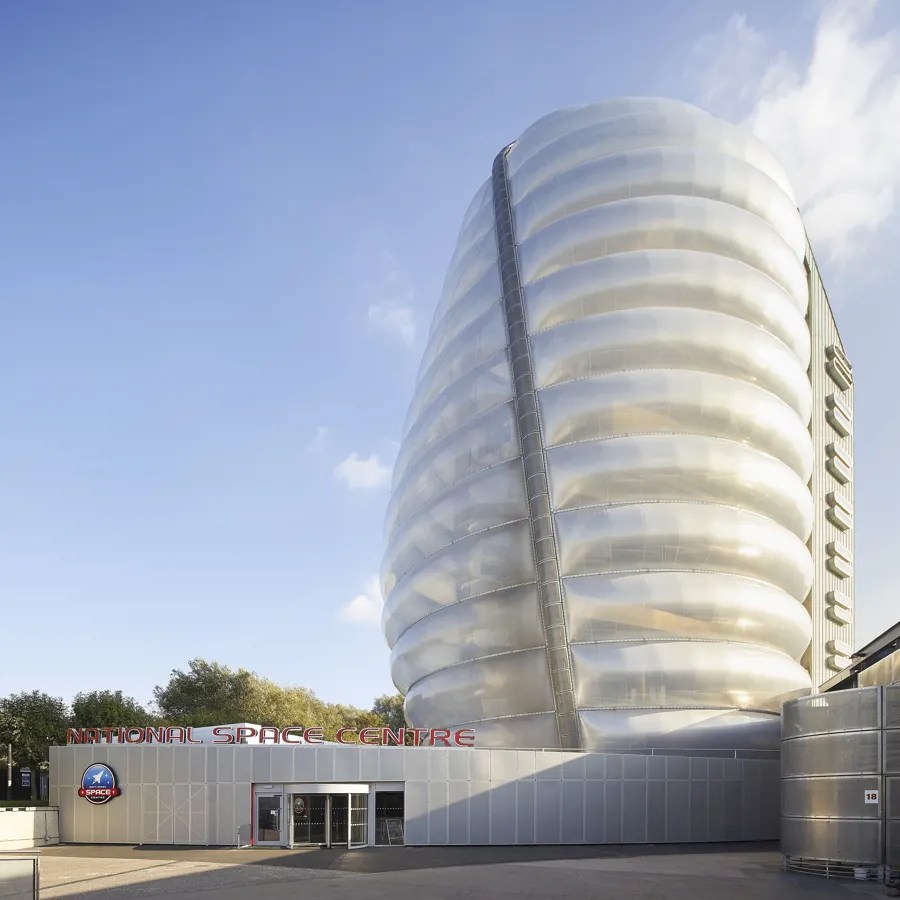
8 The National Space Centre
The National Space Centre is a museum and educational resource covering the fields of space science and astronomy, along with a space research programme in partnership with the University of Leicester. There is loads of great stuff here and it has a very exciting building:
7 The Anatomical Museum at Edinburgh
The Anatomical Museum at Edinburgh (pictured in the header) has a collection which consists of 12,000 objects and specimens that tell the story of 300 years of anatomical teaching at the University of Edinburgh.
About one third of the museum’s collection is related to pathology, anatomy and zoology. This includes anatomical teaching models, human skeletal remains, dried and fluid preserved specimens. The rest of the collections include phrenology, pharmacology, anthropology, ethnography, forensics and artworks.
The museum displays a number of unique objects including the skull of George Buchanan (tutor to James VI), a dissected body demonstrating the lymphatic system injected with mercury (dated 1788) and the skeleton of notorious murderer William Burke.
6 The Victoria Gallery and Museum
The Victoria Gallery and Museum at the University of Liverpool has a mission to enable people to explore its collections for inspiration, learning, the creation of knowledge and enjoyment in line with the University’s founding mission ‘for advancement of learning and ennoblement of life’.
We are an institution that collects, safeguards and makes accessible objects that we hold in trust for society. We believe that the exhibits you’ll find at the Victoria Gallery & Museum give you an experience that is unique from other Liverpool museums. Where else would you find the world’s most important display of false teeth under the same roof as an exhibition of fine and contemporary art? We are also very proud that these incredible items are housed in our most prized exhibit, the Victoria building.
5 Sainsbury Centre for Visual Arts
The Sainsbury Centre at UEA is one of the most prominent university art galleries in Britain, and a major national centre for the study and presentation of art. It house the extraordinary art collection of Robert and Lisa Sainsbury, as well as the Anderson Collection of Art Nouveau and the University’s Abstract and Constructivist Collection:
The Sainsbury Centre programme responds to fundamental societal challenges, answered by living art. We are a museum that recognises art as living entities. Our programming takes place throughout an open plan arts landscape over three floors of our Norman Foster-designed building and out across our sculpture park set within 350 acres of parkland. We curate six-month seasons that ask a single question of broad interest, spanning exhibitions, collection displays, residencies, and the Sculpture Park.
4 The Dorich House Museum
The Dorich House Museum at Kingston University is one of London’s ‘hidden gems’:
Dorich House is the former studio home of the sculptor Dora Gordine and her husband the Hon. Richard Hare, a scholar of Russian art and literature. Now Grade II listed, the building was completed in 1936, to Gordine’s design, and is an exceptional example of a modern studio house created by and for a female artist. Following Gordine’s death the house was acquired and renovated by Kingston University and is now open to the public as a fully accredited museum. In the spirit of Gordine’s exemplary life and career, the Museum operates as an international centre to promote and support women creative practitioners.

3 The Manchester Museum
The Manchester Museum, one of the largest university museums in the UK, is over 130 years old and is home to around four and a half million objects from natural sciences and human cultures. It has always been a place for research and learning, and is a critical part of the city’s research infrastructure today.
hello future is the name given to the £15 million capital project, which transformed the museum and completed in February 2023.
Although our building and objects are important, the hello future transformation was about so much more. We asked ourselves how we can care for people, their ideas, beliefs and relationships. We believe that museums have extraordinary power to build understanding and empathy between cultures, across generations and time.
The museum was born of civic spirit, curiosity and ambition at the height of British colonial rule, and how we acknowledge, interrogate and address this complex history is critical and urgent work. We are rethinking restitution and building new relationships with communities across the world and with those most intimately connected to our collections.
2 The Fitzwilliam Museum
The Fitzwilliam Museum is the principal museum of the University of Cambridge and preserves, researches and provides access to collections of paintings, works on paper, applied and decorative arts, coins and medals, books, manuscripts and antiquities.
From antiquity to the present day, the Fitzwilliam houses a world-renowned collection of over half a million beautiful works of art, masterpiece paintings and historical artefacts.
1 The Ashmolean Museum
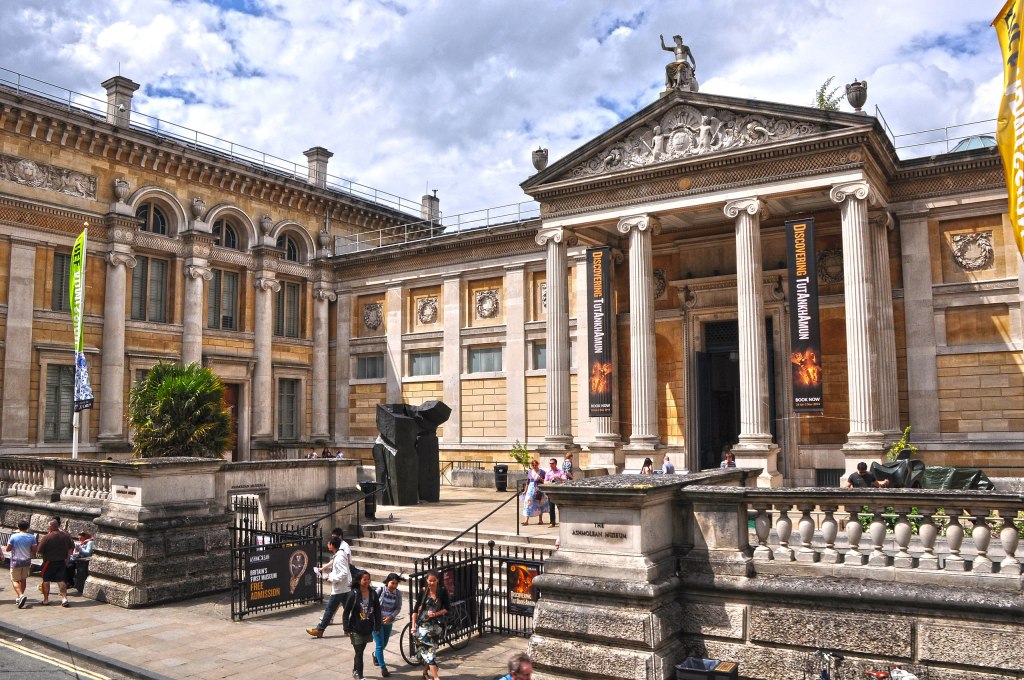
The Ashmolean is the grandaddy of them all and is the University of Oxford’s museum of art and archaeology, founded in 1683. Its world famous collections range from Egyptian mummies to contemporary art, telling human stories across cultures and across time:
When Ashmole gifted this collection to the University, it was combined with an older University collection, which included Guy Fawkes’s lantern and Jacob’s Coat of Many Colours (long since lost). The original Ashmolean Museum opened on Broad Street in 1683, in the building that is now the History of Science Museum. Members of the public were admitted to the Ashmolean Museum from the outset (a controversial policy in the 17th century). Alongside the collection, this building was designed to house a chemistry laboratory and rooms for undergraduate lectures.
It really is hard to challenge its position at the top of this particular ranking.
10 The Great North Museum
9 The Museum of English Rural Life
8 The National Space Centre
7 The Anatomical Museum at Edinburgh
6 The Victoria Gallery and Museum
5 Sainsbury Centre for Visual Arts
4 The Dorich House Museum
3 The Manchester Museum
2 The Fitzwilliam Museum
1 The Ashmolean Museum
So there you have it, your all new (ish) university museum top 10
A few of those which did not make it into the top 10 include the Polar Museum at Cambridge (which boasts Ernest Shackleton’s snow goggles), the British Cartoon Archive at the University of Kent and the small but perfectly formed University of Nottingham Museum of Archaeology.
There will undoubtedly be other museums which will be taking issue with the ranking methodology. But unfortunately there are no appeals. Maybe next time…
 The Wonderful (& Frightening) World of HE
Leave a comment