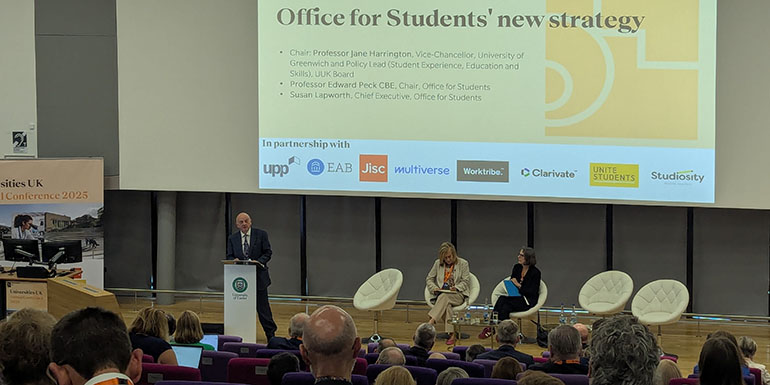
The New OfS Chair Speaks
The maiden speech by the recently-appointed chair of the Office for Students, Professor Edward Peck, delivered at the Universities UK annual conference in early September, has generally received a warm welcome, not just from those in the audience. I wasn’t present but having read the speech and imagined him delivering it I can understand why. There were quite a few positives in there for the sector and, whilst there might be several big question marks hanging over some of the issues he raised, the OfS-related vibe seemed from all accounts to be a much more upbeat one than in recent years.

I’m always cautious about suggesting there is something inherently meaningful in the poacher turned gamekeeper analogy but I do nevertheless think it is a really good thing to have a former Vice-Chancellor as chair of the OfS and especially one with 30 years of academic leadership experience under their belt.
The signalling of the change of tone was quite direct with his highlighting of four key words which are intended to reflect the new attitude of the agency: “ambitious, collaborative, vigilant and vocal.” This does feel positive although his suggestion that any delay in the reduction of the regulatory burden is down to institutions behaving badly – some playing fast and loose with franchising arrangements and many being slow to respond to the decline in their financial fortunes – seems rather unfair to me.
On the plus side
Beyond the tonal shift there are several points of note in here – let’s start with the positive ones
- The new chair stated that the OfS would be working with “UUK, Guild HE, and IHE on the development of the complaints process within the context of the Freedom of Speech legislation and guidance.” The fact that they will be doing this in a joined up way is a positive signal. It is to be hoped that they also get some sensible legal input here as well.
- He also stressed that he wants the OfS to stress publicly that HE is a national asset, a “force for for good, for individuals, for communities, and for the country” and to set out to both the media and the wider public all of the achievements of institutions.
- He will be aiming to cut the costs of the agency too and doing more with less – “reducing our own costs and those of our regulatees by becoming the most efficient regulator we can be.”
- And perhaps most surprising and positive of all we had this announcement:
As a clear indication of the repositioning of the OfS that I mentioned when I began, we are announcing today that we are looking to recruit senior representatives from the sector to join a Provider Panel. This will be a key part of the governance arrangements of the OfS. It will examine and advise on present and proposed activities in a depth which demonstrates the openness and transparency that characterises exemplary regulation.
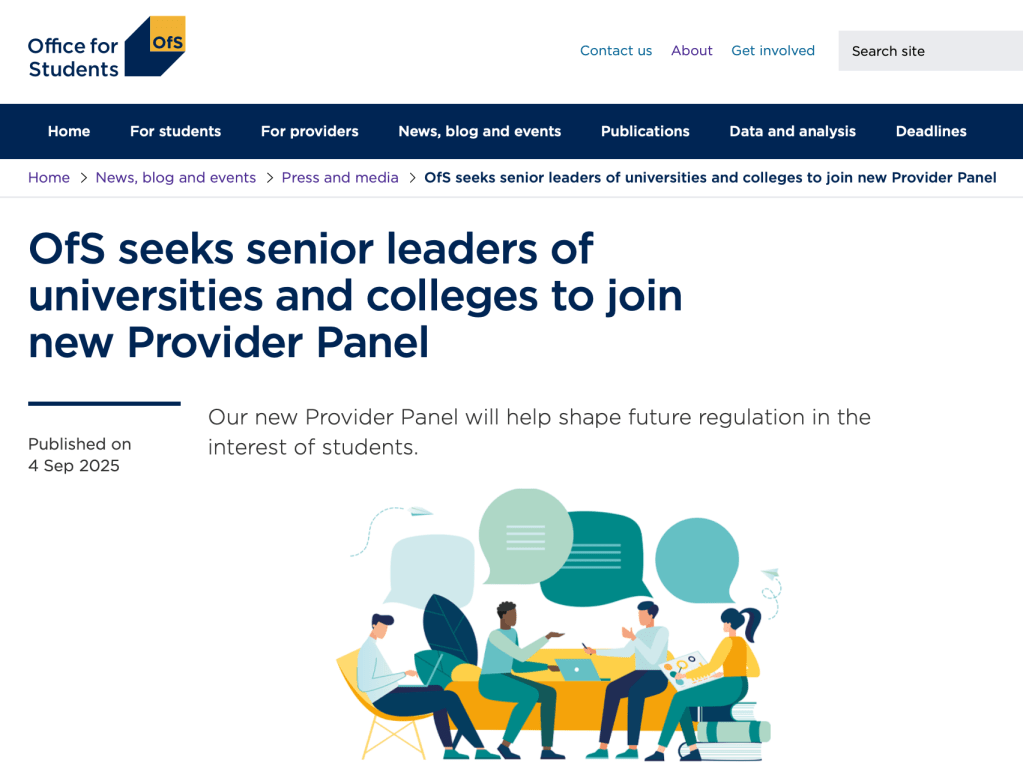
This feels like a really important step. The only issue I would have with the set up here is that I strongly feel the Provider Panel should include relevant senior personnel (such as Registrars or COOs) with direct experience of regulatory engagement and delivery. Vice-Chancellors have the broad knowledge and the heft to make their views known but reinforcing their critique with operational detail would, in my view, maximise the likelihood of success for the new panel.
It’s not all good
Less welcome is the stated intention to introduce a “revised Teaching Excellence Framework that has regulatory bite.” This was expanded on by Professor Peck in an interview before his speech with the Times where he said that “universities used their teaching rankings as a “branding exercise” but these could instead be used to determine fees.”
In addition he commented that
the regulator planned to introduce a rolling programme of assessments and that the ratings would matter more.
In his first interview since joining the OfS in July, he said: “The rating that institutions get will have consequences. At the moment they don’t really, because they’re just used much as a branding exercise by institutions concerned.
“This will be about particular opportunities being more open to institutions which have gold or silver rather than bronze for instance, or being more favourably viewed. The DfE is currently using that as a criterion for who can get access to modular funding from the Student Loans Company, as part of the lifelong learning entitlement.
“So there will be consequences in the future to having different TEF ratings.”
This takes us back to the early days of TEF as the system was being developed when there was a strong desire to link ratings to fee levels. The mechanism proved unworkable then though and, as Paul Ashwin pointed out on Wonkhe in some detail it remains impractical and wholly undesirable now.
Unfortunately this feels like a significantly retrograde step which, if it were to be progressed in any form, would substantially increase the regulatory cost and burden on institutions. The fact that TEF ratings are a cosmetic branding exercise and of, at best, limited value to prospective students, is not an argument for trying to beef up the exercise but rather a strong case for binning TEF altogether. There are many other ways to encourage the enhancement of quality than with a very small golden carrot and an extremely big bronze stick.
Just a minute
Finally, in looking to ensure that “Boards and Councils exercise robust oversight of higher education providers” it will be important that the OfS sets a good example here.
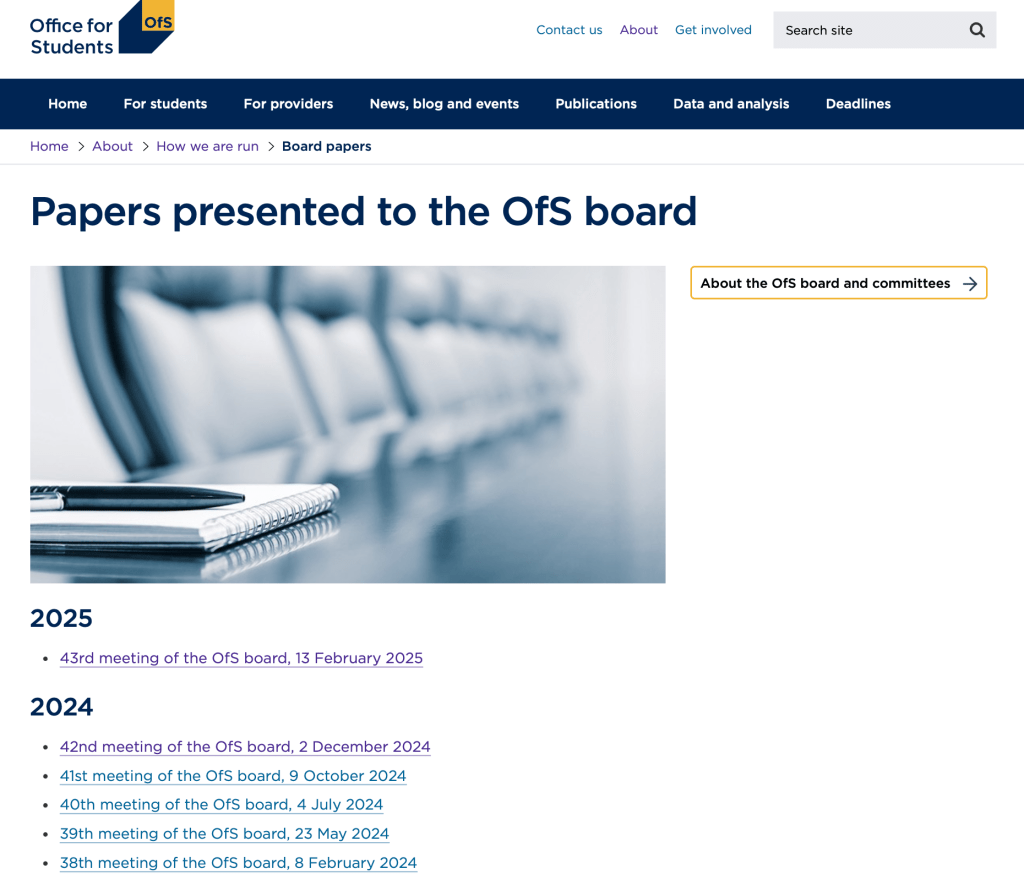
But it does rather look as if the OfS is pretty slow in producing its own board minutes. Indeed, as of today it seems we have not had any Board papers published since the February meeting (there have presumably been at least another two or three since then) and the last board minutes available are from December 2024. If a university governing body was operating to this schedule it would probably come in for more than a little criticism.
Reimagining regulation
Overall though, the positive mood here I think just about outweighs the concerns about the problems associated with a revamped TEF (which I would be surprised to see progressing beyond the whiteboard). There remain big opportunities for reducing the cost and burden of regulation – see this post where I set out some of the steps which could be taken. But the plea from the chair to “please bear in mind that we at the OfS are still learning how best to regulate, just as you are still learning how best to be regulated” does sound a little off-beam – the OfS has been around in its established form for almost eight years now and should really be getting the hang of things by now (as David Kernohan has pointed out). Still, I am sure we all want to be part of the discussion when they are “establishing with the DfE the policy and legal aspects of reimagining regulation of higher education in England for the 2030s.” That is another positive to hold on to. We really do need more imagination in our regulation.


Leave a Reply