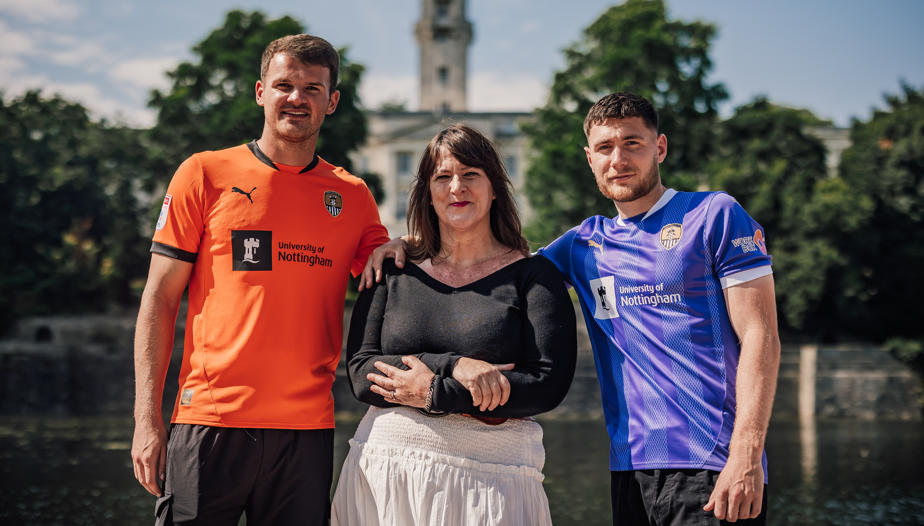
The impact of football on higher education is significant in many ways. Arguably the most notable is the concept of the league table. Elemental to identifying football teams’ relative performance, the purity and accuracy of the table in footballing world is (almost) unquestioned (at least until points deductions for financial irregularities come into play). In higher education though the place of such rankings is hugely contested and they are extremely problematic. Nevertheless, they exist and the comparisons are inevitable, whether we are discussing the Premier League, Serie A or the National League South. But more interesting (to me at least) are the ways in which universities and their local teams combine in different ways.
On the Ball, City
Many years ago (no, really) when I worked at UEA, the fortunes of Norwich City and the University seemed completely intertwined. The benefits of the extraordinary UEFA Cup run of 1993-94, when they beat the giants of Bayern Munich and were edged out by Inter Milan in the next round, was widely believed in the university to have had a big impact on student recruitment.
It probably had very little to do with the classic ‘egg and cress’ home strip of that particular season, nor was the local building society sponsorship impactful. But being in Europe for a ‘small’ team was a big deal.
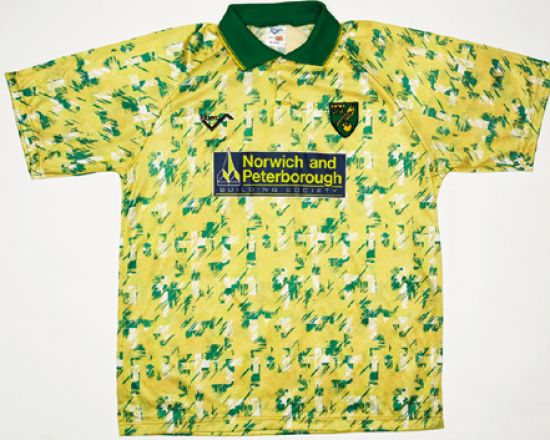
Since those heady days, things have really moved on both in football strip design and sponsorship. Strip sponsorship for teams at every level is a fickle business, changing every year on team shirts (and sleeves, and backs and shorts…) meaning of course a new outrageously over-priced purchase is expected of fans every season.
Win Matches, Attract Students
But that linkage between local team success and university recruitment is definitely more than a folk myth. As reported recently in the Guardian, an academic study has demonstrated that a high profile football team doing well in the league can impact positively on a university’s recruitment:
The study found that over the past 20 years, universities linked to football clubs relegated from the Premier League recorded a 4% to 8% drop in undergraduate admissions compared with those whose clubs survived.
In cases where the team bounced back to the Premier League after one season, the drop in admissions was about 4%, but that stretched to 8% if they did not immediately regain their place in the top tier.
“We found that having a football team that’s doing well can be a benefit to your admissions if you’re a university chancellor,” said Dr Carl Singleton, a senior lecturer in economics at the University of Stirling.
Researchers believe the increased brand awareness that comes from being in English football’s top flight helps lure students to associated universities. “Sport is an international language and football’s reach is incredible,” said Singleton. “The name recognition related to a place really matters.”
Logos on Shirts
I must admit I am always intrigued by sponsors, particularly those I’ve never heard of and those who are genuinely local. These days there are more gambling-related sponsors than you can shake a stick at (hopefully soon to disappear) but also many other odd ones, ranging from boiler makers to airlines to whole countries (one team is still extremely keen that you visit Rwanda). I’ve no idea who Project 35 are (Plymouth Argyle) or Mercury (Coventry City) but I do like the fact that they are prepared to back their local team.
But the thing I am really interested in, of course, is where a university sponsors a team. There are plenty of examples of partnerships of one kind or another between teams and their local university or some kind of sponsorship of a stand or just a hoarding in a ground but it really does seem that there aren’t many shirt sponsorships in the men’s game in 2024-25. And I can’t find any at all in the upper tiers of women’s football for this season.
When I last looked at this crucial issue on Wonkhe back in 2018 there seemed to be quite a bit more going on in terms of university sponsorship of football teams. The University of Bolton had a big tie up with Bolton Wanderers, including stadium naming. Similar links were in place between Glyndwr University and Wrexham and Portsmouth University and its local team were close allies too. Other big relationships included Aston University with Aston Villa, Wolverhampton University with Wolves and a long-standing link between Swansea University and the Swans. But things have moved on and money is now a bit tighter.
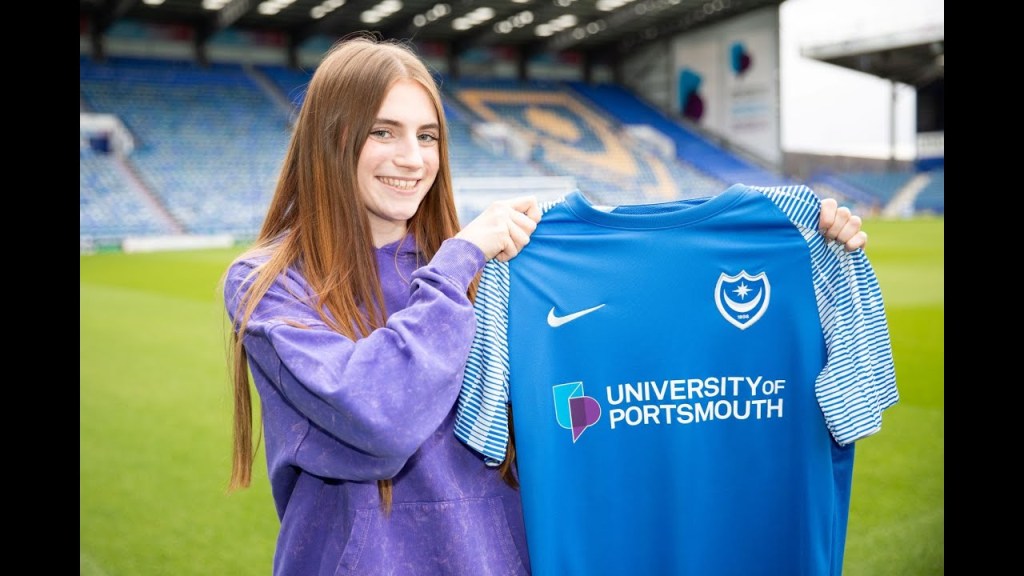
So where are we now? Well, first up, it really does not appear that there is a lot going on in terms of Premier League and university sponsorship this season. In the EFL Championship we are again looking at Portsmouth as the big player:
Also in the Championship we have the University of Hertfordshire showing its commitment via sleeve sponsorship of Watford FC. There is a lot more to the relationship than this though including a range of other opportunities:
These will include industry days at the Club’s Vicarage Road stadium, where students will receive high level insight into what it really takes to operate a professional football club. Additional work experience and paid work opportunities will also be available; free tickets for matches and a chance to access the pitch itself during an exclusive play on the pitch session at the end of the season.
Watford FC is then set to work on a number of new degree apprenticeship programmes with the University, adding to the institution’s expanding range of vocational courses across a wide variety of different subjects, and strengthening its commitment to providing pathways to higher education outside of traditional degrees.

In League 1, Lincoln University has had a long association with its local team and this year the university is sponsoring the Imps’ away shirt. Meanwhile, Northampton Town are enjoying their shirt sponsorship deal with the University of the same name. League 2 sees the University of Bradford sponsoring the back of Bradford City’s shirts and Staffordshire similarly backing Port Vale (although I’m not clear whether Staffs are using their old or new name).

And further down the pyramid we have Wealdstone in the National League, enjoying the support of Brunel University.
But the big one, and I’m sure everyone will understand the excitement about this exsmple, is the news that the University of Nottingham is sponsoring the away and third kits of Notts County FC. Yes, the oldest professional club and football league sponsor is linking with its local university for a range of activities, including shirt sponsorship. It doesn’t get bigger than this.
Are there other notable university/football club sponsorship deals we need to be aware of?


 The Wonderful (& Frightening) World of HE
Leave a comment