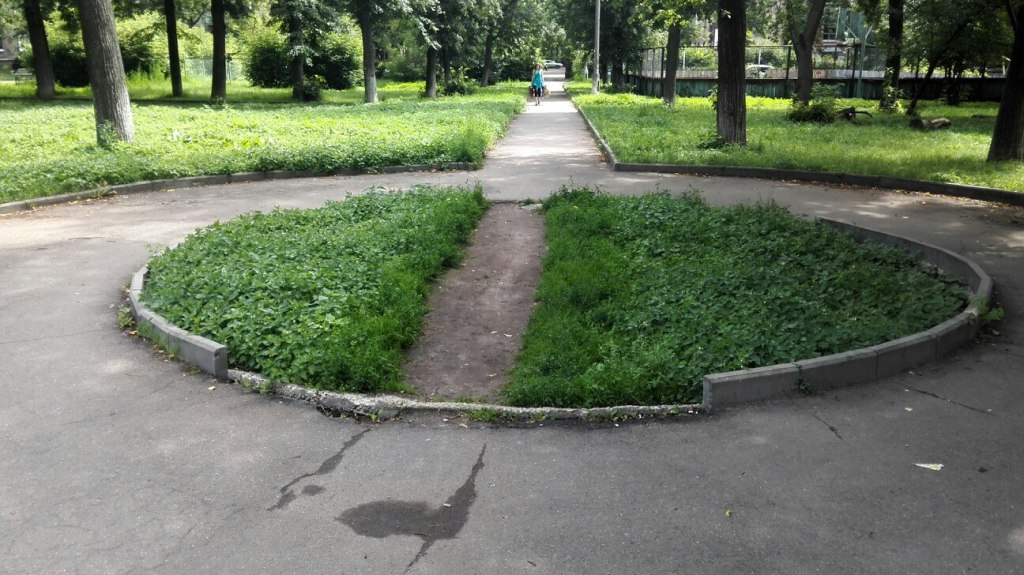
Desire paths on university campuses
Having only ever been vaguely aware of the concept of what I now know are called ‘desire paths,’ the alternatives to planner-enforced and built footways, it seems there are a great many people interested or indeed obsessed with the things.
Robert McFarlane, writing on X a few years ago (before the cess-pit days arrived), shared a very handy definition of them: “paths & tracks made over time by the wishes & feet of walkers, especially those paths that run contrary to design or planning. Free-will ways.”
Quite a few of the pictures of desire paths and the stories on Reddit about them include reference to universities and this reminded me of a discussion I’d had with a colleague many years ago at UEA. He claimed that when UEA and the University of Sussex were both being established and their campuses designed in the early 1960s that the two founding Vice-Chancellors had had a discussion on this very issue. Although they were principally discussing academic matters and the desire to provide a broad-based interdisciplinary curricular offer, they also talked about campus design. This conversation apparently happened in a rowing boat (two VCs in a boat?) and resulted in Sussex following the notion of allowing students and staff to choose their own pathways around the new campus before determining where the formal footpaths would be laid.
Now I must admit that I just accepted this story as true without ever really questioning it, even the rowing boat bit. I’ve no idea if any of it is accurate – and it is perfectly possible that I am conflating several recollections – but recently it came back to me when I came across various references to desire paths at universities.
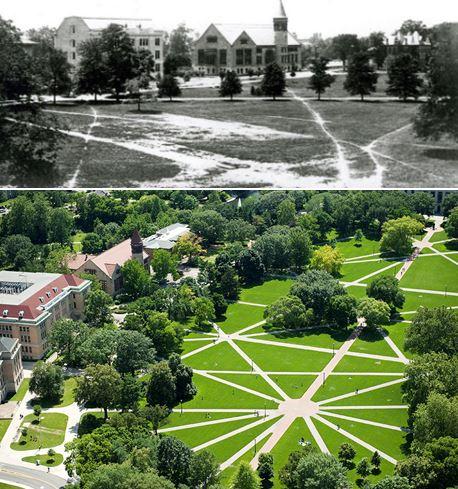
Over in Ohio
This Reddit post highlights the way in which Ohio State University built on students’ desire paths to establish a distinctive pattern in the centre of its campus.
Meanwhile in Michigan
According to this blog on the paths of desire at Michigan State University, back in 1914
University Architect Joseph N. Bradford waited patiently for winter before using a hot air balloon to get a bird’s eye view of the intricate web of criss-crossing trails that students had carved in the snow. Their findings were then used in the configuration of the more formal network of paved walkways.
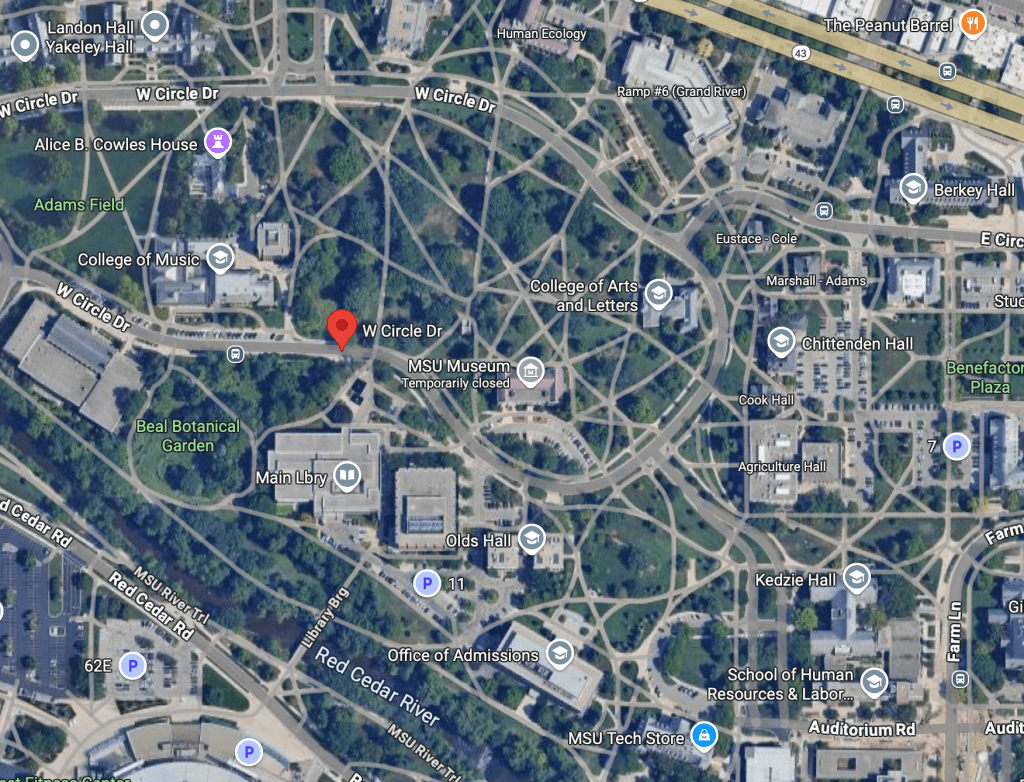
As this other history of MSU’s sidewalks puts it:
When MSU’s campus was first being developed, architects had limited access to concrete and pavement. That left students to walk through grass to get between buildings. Students often took the same routes, gradually wearing down the grass until an informal walkway formed beneath their feet…The strange latticework of MSU’s pedestrian-made pathways ended up being paved, resulting in the sidewalk system students still use today. Students changed routes as more buildings were added, and walkways followed suit.
Back to Berkshire
Another reference, this time in the UK, is in this student dissertation by Wiktoria Jarosz of the University of Reading in 2020 looking at desire paths on the Whiteknights campus. It was so good it resulted in an award from RIBA too which is summarized rather nicely here:
A desire path is a rebellion against the imposed ruling of designed paths, through the creation of alternative, refined routes. Desire paths are a form of resistance against what is ‘proper’; the research suggests there is a subconscious yearning for more organic routes which cut through imposed angular corners of rigidly designed paths. An analytical observation of Whiteknights Campus presents the importance of desire paths in urban design by creating mappings to examine their nature, offer user feedback, and provide a more personal exploration of space. The results suggest that desire paths are not just faster, alternative routes from A to B, but more of a translation of thought during urban navigation.
When the planners get involved
This article on the Building Design and Construction site discusses a software tool called CoMap used by planners to work with desire paths in designing campus layouts. Paul Schlapobersky, of design firm Sasaki, described how they used it to seek to complete what he called the “line of desire” across UC San Diego campus:
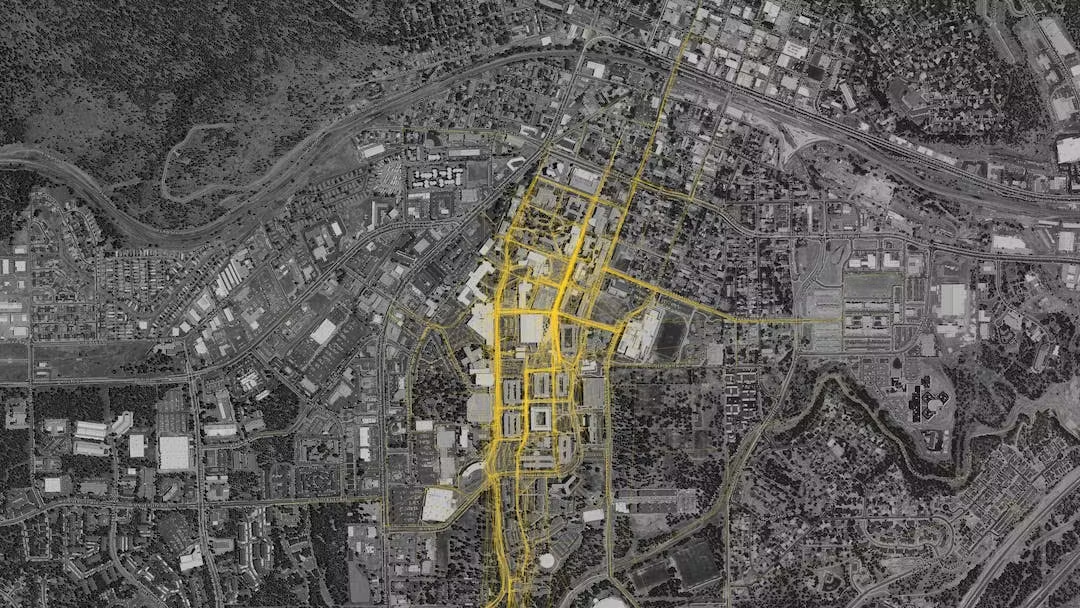
“The entire study became about trying to ‘complete’ that line through a system of walkways and bridges connecting important nodes on the campus to this off-campus site and to newly-installed public transit beyond.” One of the main tools Sasaki uses to mitigate the informal desire pathis a proprietary program developed by its in-house data and design tools group called CoMap. This collaborative mapping program generates a spatial visualization of how people experience a campus or region. When used at institutions, CoMap’s survey function allows campus communities to add notes about places or trace routes on a map of the campus. Sasaki then uses the data to inform planning recommendations.
“Many times the paths most traveled by students are not necessarily formally designed paths. The planning recommendation might therefore be to strengthen a desire line path by widening it, resurfacing it, removing an impediment, or lining it with active uses,” says Tyler Patrick, a planner with Sasaki.
Anyway, I’m a confirmed fan of the idea of using desire paths as a basis for planning and particularly keen where this involves a university campus. Do let me know of other campus examples.

 The Wonderful (& Frightening) World of HE
Leave a comment