Scamming students with sham universities
One of the surprising (to me at least) AI-related developments in higher education is covered in this recent report from Inside HigherEd. Over the years there have been regular examples of fake universities being created and sold to prospective students via more or less convincing websites filled with stock photos and plagiarized text. It seems that things have really taken off though thanks to generative AI.
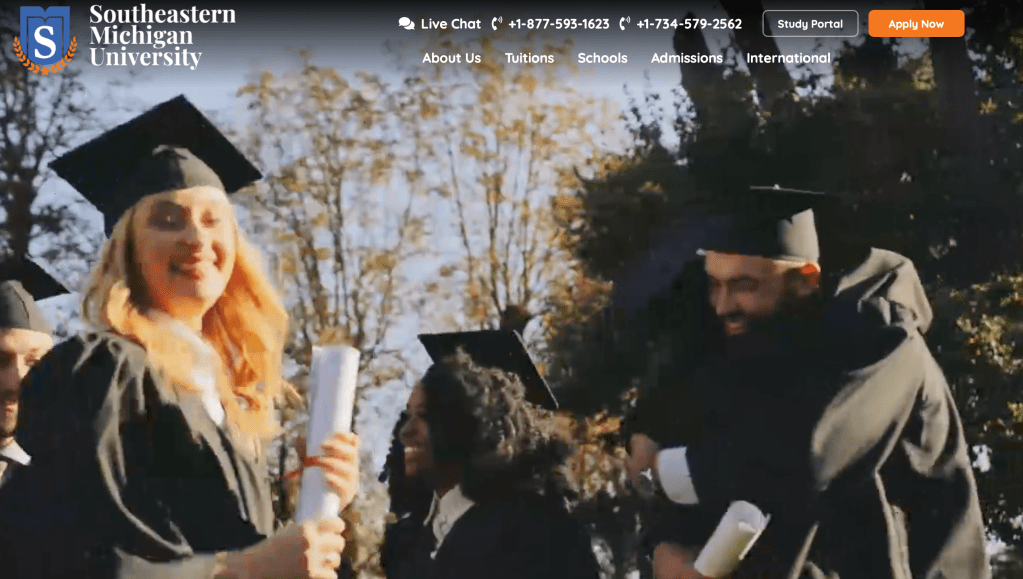
The report describes a whole network of fake websites including the example of Southeastern Michigan University which looks like the real thing at first glance with all the usual university website features. But there are some warning signs:
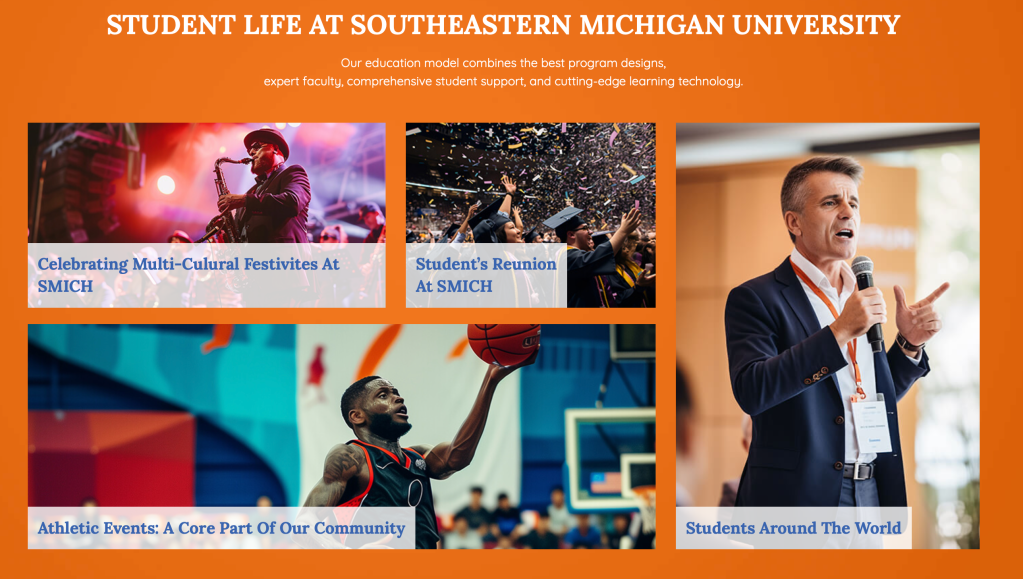
Blurry backgrounds and distorted limbs hint at the use of generative artificial intelligence. Some images seem likely to fool the untrained eye, while others—like a basketball player with veins bulging from his angular arms—could have been ripped from a poorly illustrated comic book. Meanwhile, paragraphs of text contain repetitive, grandiose and nonspecific language, characteristic of a chat bot’s writing.
In reality, the university is as fake as some of the content on its website. And it’s part of a much larger scam fueled in part by the rise of generative AI.
It seems that Southeastern Michigan is just one of nearly 40 fake university sites that the investigation by Inside Higher Ed has uncovered. Many of these appear to have been developed with or supplemented by AI.
The sites seem to be part of a network, based on the use of identical language, the repetition of images and other design similarities. And many of these fake colleges also have a presence on social media sites, including LinkedIn, Instagram and Facebook.
An Inside Higher Ed analysis also turned up dozens of websites for nonexistent accreditors and a fake U.S. Department of Education website. They all contain at least some AI-generated images and design templates similar to the college websites’, including many that list those fake accreditors—and link to their websites—to give an air of legitimacy. The Education Department is also investigating the scam.

I’m not certain if there are examples of this in the UK yet but it can only be a matter of time. The key factor now is the speed of production:
“This lowers the transaction costs for making a scam site,” said Jose Marichal, a professor of political science at California Lutheran University who studies how algorithms and AI are restructuring social and political institutions. “If I wanted to do this [before generative AI], it would have taken me a week, maybe a month, to put all this together. Now, it would take me a matter of hours.”
So, this is clearly an issue and really interesting to learn about it. But then this did get me thinking – what about those names? Can you really tell a fake university just from its name? We’ve done a UK-based quiz along these lines before but can you tell the real and fake US universities apart?
Quiz Time
OK, it is quiz time then – can you spot the sham institutions among the sound ones? There are two fake universities in each group so 10 in all to spot. See how many you can get. There is a link to the answers at the end.
Group A
1 University of Hartford
2 Baltimore Metropolitan University
3 Houston University of Texas
4 Bentley University
5 McMurry University
Group B
1 Newark University
2 University of the West
3 Monroe University
4 Parker University
5 Scottsdale University of Arizona
Group C
1 Goodwin University
2 California Coast University
3 Georgia City University
4 Western University of Miami
5 Excelsior University
Group D
1 Sacred Hart University
2 California Lake University
3 Amberton University
4 Grand View University
5 Crosby University
Group E
1 Denver Liberty University
2 Martin Luther King University
3 Lesley University
4 Simpson University
5 Centenary University
Answers
Pretty straightforward eh? You can find the answers here. How many did you get?

 The Wonderful (& Frightening) World of HE
Leave a comment