
A long time ago (2010 to be exact) I published a short item on Wonkhe about a report of some research which kind of suggested that miserable weather made universities more attractive to prospective students.
According to the article about this in the Telegraph (it’s no longer available as far as I can tell):
Schoolchildren who visit a university on a cloudy day are more likely to decide to go there because they prefer to study somewhere that is not sunny. Far from the stereotype of pupils picking a place where they think they will have most fun, they subconsciously prefer somewhere amenable to doing homework, it was found. Professor Uri Simonsohn, of the University of Pennsylvania, made the discovery after analysing data on campus visits by 1,284 prospective students to a university.
He and his team found that students were nine per cent more likely to enrol to the university if the weather was grey and there was no sun. In order to rule out the possibility that students visiting on cloudier months – December rather than September – were keener, he controlled for this and found that the effect of the weather actually gets a bit stronger.
I wasn’t wholly convinced by this at the time but did feel that the proposition that students prefer working on cloudier days and having fun outside when it’s sunny was not unreasonable. The argument then ran that these associations may mean that weather during a campus visit affects the perception of the institution so that universities visited on cloudy days may seem more compatible with academic activities than those visited on sunny ones.
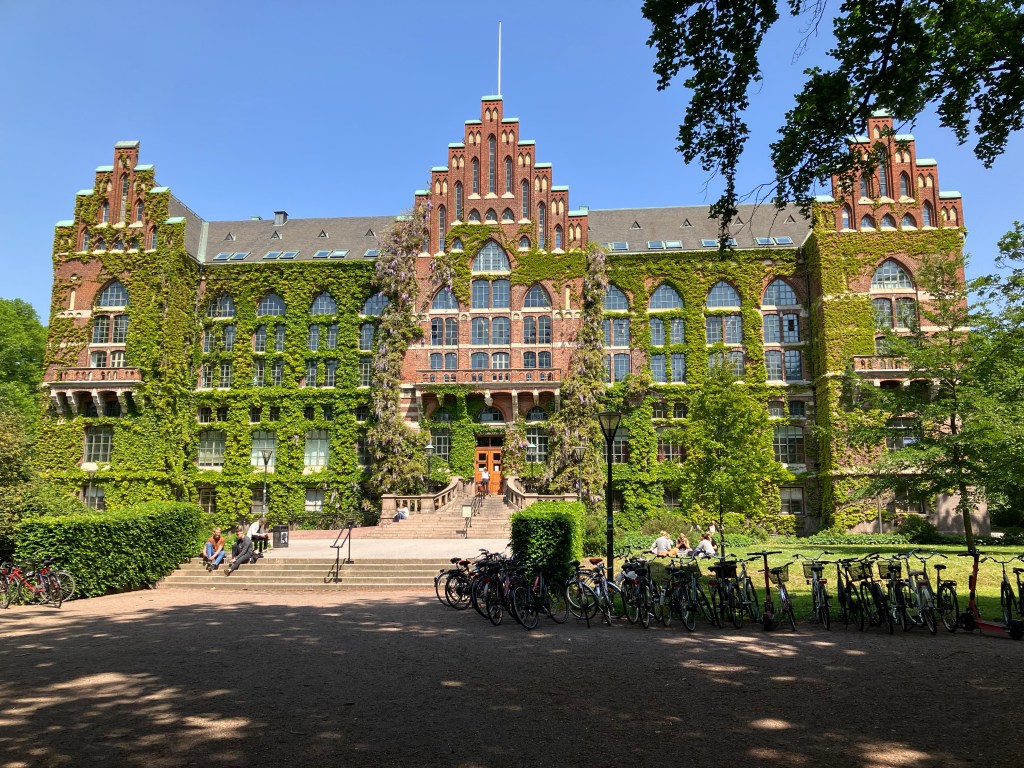
My recollections of student recruitment activity is that there was a general consensus that sunnier days are better because campuses look much more pleasant and attractive. Also, rain tends to make concrete, prevalent at many UK universities, look pretty grim and generally off-putting. So it seemed like interesting but not wholly convincing research.
Weather with you
A recent article in Inside Higher Ed offered a new perspective on this niche topic:
in a working paper published this month by the National Bureau of Economic Research, the researchers used data from an unnamed Northeast college to investigate whether weather conditions on the day a student toured the campus can affect their choice to apply.
They found that students who toured on a rainy or excessively hot day were 8.3 percent and 10.1 percent less likely to apply, respectively, than someone who toured on a moderate day. Cloudy and cold conditions also lessened the likelihood that a tour participant would apply.
It does sound both unexpected and yet predictable.
Amherst senior Olivia Feldman, who was Hyman’s research assistant on the project, said she was unsurprised by the results of the study; they validated her own experience touring colleges four years ago.
“When you take a tour—at least, when I took a tour—I really tried to imagine myself at the school. What you’re trying to do on a tour is not just examine the factors about the school that you could see online, but to really envision yourself there and get an impression of what life would be like there,” she said. “When I took a tour of a school and it was particularly rainy, that certainly affected my impression of what life would be like at the school, even if that’s sort of irrational … so it was really interesting to be able to examine whether that’s actually an empirical phenomenon.”
As the article notes, the weather is just one of many factors which can have an impact on prospective students’ choice:
the reasons that weather can affect tour participants could go beyond students simply disliking rain or heat. Extreme weather conditions can impact people’s moods, with heat causing heightened levels of irritability and trouble concentrating; that is to say, a student taking a tour in the heat might be more irked by other minor annoyances than they would have been on a nicer day.
And as the Dean of admission and financial aid at Amherst notes in relation to the findings:
“What happens when you point it out to students and families? Might they internalize that and say … ‘I should recognize my own perceptions here’?” he said. “And maybe that helps us out a little bit on a rainy day, that families might take an extra moment to say, ‘Did I really not like that college or was it because it was rainy? I might be one of those people they were talking about in that Amherst economics study.’”

Why does it always rain on me?
On reading the Inside HigherEd article I knew that I had previously heard of the topic before which sent me back to the 2010 Wonkhe piece. But it was good to see that the research quoted does refer to the earlier work:
The paper most similar to our own is Simonsohn (2010), which examines the effect of cloud cover during campus visits to an anonymous selective university by high school seniors who have already applied to the institution. The paper’s main finding is that cloudy weather increases the likelihood that students enroll in that institution. Simonsohn (2010) posits that worse weather (i.e., cloud cover) makes the institution more appealing, because students will spend a lot of time studying and prefer not to miss out on good weather.
But the author adds that their sample size was much larger and comments that
if the selected sample in Simonsohn (2010) are the most studious and dedicated students, then their positive reaction to cloud cover may not be representative of the average selective college applicant. Alternatively, our differing results could reflect changing applicant preferences over the last decade and a half.
It’s often said that the weather is one of the favourite topics of conversation for the British. On the basis that student recruitment teams in British universities are not wholly unrepresentative of the population at large we can safely assume they spend a decent amount of time talking about the weather. Now they have something really specific to consider too. Not that anyone can do very much about it.
 The Wonderful (& Frightening) World of HE
Leave a comment