The All New International Ranking of University Research Ships
As many will recall, 2016 saw an online poll which became the definitive example of why not to run open uncontrolled online polls. As Wikipedia reports:
In March 2016, the Natural Environment Research Council (NERC) announced that members of the public were being asked to suggest names for the ship. Names previously used would not be eligible, but otherwise it was open to suggestions. The NERC stated that they would have the final say, and that the most popular name in the poll would not necessarily be the one used.
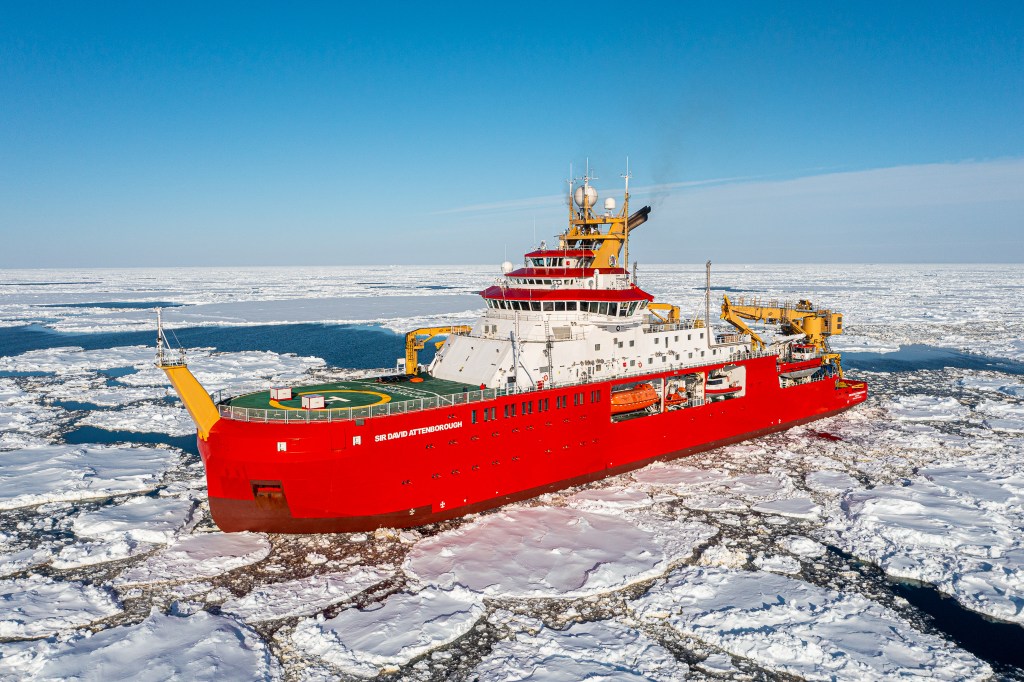
Former BBC Radio Jersey presenter James Hand jokingly suggested RRS “Boaty McBoatface“. This quickly became the most popular choice and was the runaway winner when the poll closed, with 124,108 votes. On 6 May 2016, science minister Jo Johnson announced that the choice had been made to name the ship after naturalist Sir David Attenborough, but that Boaty McBoatface would be the name of one of David Attenborough‘s remotely controlled submersibles.
Leaving aside the naming issue this news story does remind us all of the significant role played by research ships, particularly in terms of environment-related investigations. Whilst most of these vessels are parts of national research fleets and funded through government or research council grants, many are hosted and managed by universities. They are great research assets but also, I suspect, pretty expensive to run and maintain. And generally it appears, perhaps unsurprisingly, it is only universities near the coast which tend to have such vessels.
But which are the best ships? Where are the top sea going research vessels? Drawing on criteria including number of berths, endurance, length, tonnage propulsion and speed plus an overall scientific research vibe rating we have come up with this all new international ranking of research ships.
The University Research Ships International Top 10
10. Just cruising into this year’s top 10 is the R/V Rachel Carson at the University of Washington’s College of the Environment:
The newest member of the College fleet, the R/V Rachel Carson arrived on December 28, 2017 thanks to the exceptional generosity of donors Bill and Beatrice Booth. The UW and its many partners can conduct research in a wider range of conditions and locations—from Puget Sound to the open ocean—than on the Carson’s predecessor, the R/V Clifford A. Barnes, thanks to the Carson’s endurance, excellent ship handling and seakeeping capabilities, significantly increased lab space, and increased load handling abilities. With 13 berths, the R/V Carson makes it possible for more students to participate in overnight research on Washington’s inland and coastal waters.
9. In ninth place then we have the University of Southampton’s research ship, the R V Callista which is a catamaran used by staff and students for a range of fieldwork and research and is available to those in the university’s School of Ocean and Earth Science.
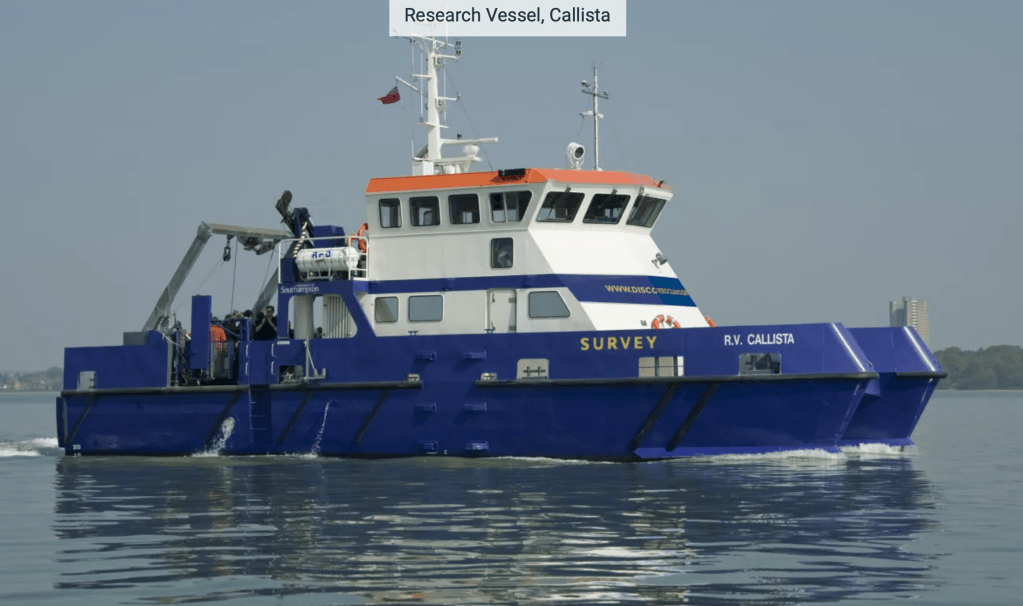
The purpose-built boat is designed to carry out a variety of work including:
- deployment of scientific equipment
- collection of biological, chemical and sediment samples
- surveying
- diving operations
- geophysics
- educational visits by external groups including schools, colleges and universities
8. Next up is the RV Falcon Spirit at the University of Plymouth in the UK. One of a number of vessels at the university, the RV Falcon Spirit is a 14 metre aluminium catamaran configured as a flexible platform for teaching and research which includes various exciting technical features:
It is used extensively for oceanographic and biological sampling as well as hydrographic survey. To support this, it has lifting capability via a stern H-frame, a variety of mounting points for survey equipment and both dry and wet laboratory spaces.
Internally the vessel has dry laboratory space for a minimum of six workstations, plus a separate wet laboratory facility. With a pair of 500 horsepower diesel engines, the vessel is capable of a 165-mile range at a 15-knot service speed, with considerable power in reserve. The vessel comes with the capability to troll at very slow speeds and boasts a one metre by one-metre moon pool, two independent 600kg hydraulic capstans, and a 400kg pot hauler in way of a double door in the starboard bulwark.
7. Number seven this year is our sole southern hemisphere entry, Te Kaihōpara (The Explorer) at the University of Auckland in New Zealand which is a new ship, taking over duties from a previous vessel:
Te Kaihōpara will also have more capacity to sample the seafloor, deploy increasingly sophisticated equipment and analytical instruments, and carry more students and passengers for training and to experience our marine environment.
Te Kaihōpara’s name was generously gifted to us by Mook Hohneck – Chair of the Ngāti Manuhiri Settlement Trust. Te Kaihōpara will spend much of her life working in Ngāti Manuhiri’s rohe moana.
6. In sixth spot we have the R V Mary Anning at Swansea University, the first of two Welsh entries in this year’s top 10. The Mary Anning is an 18.5m catamaran designed primarily for teaching and research, along with commercial activities:
As a highly sophisticated research vessel which is dedicated also for teaching, we can equip our marine biology graduates with real-world and practical hands-on experience in the use of a wide range of sampling equipment and survey techniques. During the course of their studies, marine biology students will spend over 25 hours on the boat and throughout these boat-based modules students will learn how to sample different species and habitats across Swansea Bay and the stunning Gower coastline. This allows us to equip students with fundamentally important skills for their future research and professional life, including for careers in industry and government agencies.
5. In at five is a Qatari research vessel, Janan:
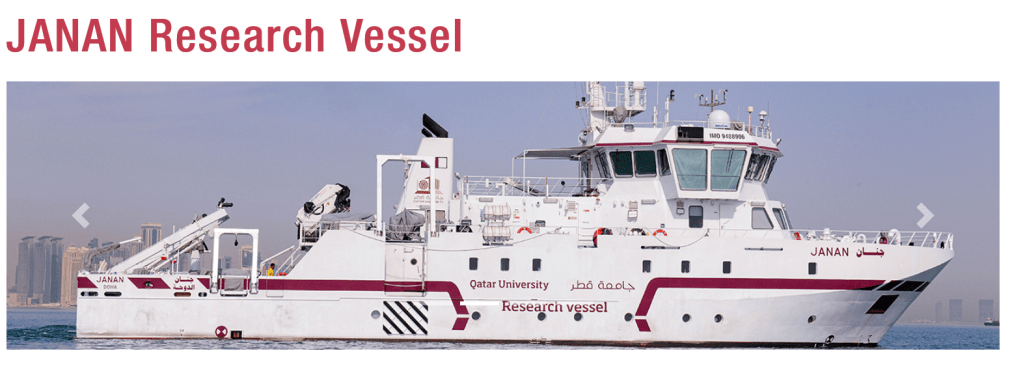
The research vessel Janan marked the advent of a new era of scientific research through attracting prominent scholars from Qatar and other countries to conduct research and studies related to the Qatari marine and territorial waters of Arab Gulf States and their natural resources. Janan also avails its capabilities and advanced laboratories to train students and future scientists, who will be assets for the future and sources of pride for Qatar and its people. Janan is a dream comes true for Qatari researchers with its modern equipment and research laboratories in the fields of marine and oceanic sciences. Janan has also helped boosting research collaboration with Gulf States and neighboring regions such as the Arabian Sea and the Red Sea.
4. Fourth in this year’s table is a Swedish research ship, the R/V Electra which is based at Stockholm University‘s marine research station, Askö Laboratory on the Baltic. The R/V Electra is a state of the art vessel which is:
equipped and designed to fit several research purposes and has become an important platform to strengthen marine research and education at Stockholm University.
R/V Electra is a 24,3 metres long and 7 metres wide ice-breaking vessel. It is equipped with technical instruments for water- sediment- and geophysical sampling. Thanks to modern ship technique and low-impact engines R/V Electra has exceptional functionality to work in a larger geographical area.
3. The bronze medal berth is occupied by the RRS Discovery at the UK’s National Oceanography Centre (which does qualify as an HE institution given its research activity and graduate research and teaching programmes). The RSS Discovery is a multidisciplinary ship, specifically designed for the challenges of 21st century oceanography:
With the ability to travel to remote and extreme oceanic environments, RRS Discovery is highly sophisticated and has the ability to operate in high sea states (up to sea-state 6). The ship comes with sub-bottom profiling and multi-beam equipment for mapping the seabed, while her dynamic positioning capability means that Remotely Operated Vehicles can be used. Her wide range of cranes and over-side gantries, with associated winches and wires, will allow many different types of equipment to be deployed from the ship. These facilities and the many more listed below help support the marine science community as it undertakes research of national and global importance.
2. This year’s runner up can be found over in Denmark where Aarhus University has the research ship Aurora which is operated by the Department of Bioscience and Geoscience and undertakes 10 day missions with 14 on board:
The large research ship is equipped with the latest technology for seabed surveys. It has also been important that all equipment can be easily set up and taken back down, providing a high degree of flexibility.
Aurora is also equipped with sound-absorbing propellers to provide researchers with the best possible working conditions.
Aurora will not only be used as a research ship but will also sometimes be a platform for teaching high school students as well as courses for students in marine biology and geology.
1. And top of the nautical heap in this year’s international research ship rankings is Prince Madog, a ship based at Bangor University in Wales. Prince Madog at Bangor University has a long history but the latest ship entered service in 2001:
The vessel enables the UK’s marine scientists to study the biology, chemistry, geology and physics of our seas. Designed to take up to ten scientists and 20 students. The School of Ocean Sciences, Bangor and other university departments in the UK also use the vessel as a teaching platform, training the next generation of marine scientists.

The top 10 in full:
1 Prince Madog, Bangor University
2 Aurora, Aarhus University
3 RRS Discovery, National Oceanography Centre
4 R/V Electra, Stockholm University
5 Janan, Qatar University
6 R V Mary Anning, Swansea University
7 Te Kaihōpara, University of Auckland
8 RV Falcon Spirit, University of Plymouth
9 R V Callista, University of Southampton
10 R/V Rachel Carson, University of Washington
So, that’s your new international research vessel ranking then. It’s full power ahead for next year’s marine-based research activity.


 The Wonderful (& Frightening) World of HE
Leave a reply to Tom Rippeth Cancel reply