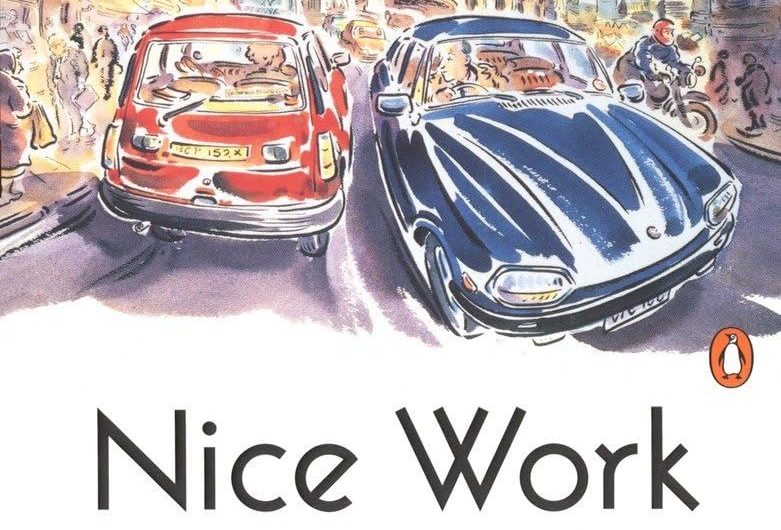
I’ve long had a keen interest in campus novels. Part of this is naturally an interest in seeing how others view something I’m totally invested in, higher education, and part of it is about really hoping to find a great read. It’s a sort of bus-person’s fiction reading holiday if you like.
Over the years though the reality has often been that my optimism as a new, positively reviewed, novel set on or near a university or college campus emerges, moves rapidly to disappointment on reading the thing. It is fair to say that the bad ones significantly outnumber the good campus novels and therefore I am more often than not disappointed. It’s not just new campus novels that are below par either – some of the ones which have been around for ages are not necessarily that good either.
It is unarguably the case though that some of the best campus novels, ever, have been written by David Lodge. Lodge, who sadly died recently, set the benchmark for clever, incisive and entertaining novels set in the world of higher education from his earliest works right through to later offerings.
Lodge wrote a nice piece for the Guardian a while back in which he commented on a terrific campus novel by Nabokov and offered some wider observations about the genre:
To consider the possible sources of Pnin in Nabokov’s experiences at Cornell is to be reminded that the book was a very early example of the “campus novel”, a subgenre which is very familiar to us now, but was only just beginning to manifest itself in the early 50s. Mary McCarthy’s The Groves of Academe has some claim to be the first in the field, and Nabokov would certainly have been familiar with it, since he knew both McCarthy and her husband, Edmund Wilson, who was one of his closest literary friends at this time (they fell out later). Randall Jarrell’s Pictures from an Institution (54) which was, for those in the know, a riposte to McCarthy’s book, gave a further impetus to the new genre, though Nabokov had already embarked upon the Pnin stories when it appeared.
Lodge continues by highlighting the importance of the distinctive nature of the campus setting in all three books:
a “small world” removed from the hustle and bustle of modern urban life, in which social and political behaviour can be amusingly observed in the interaction of characters whose high intellectual pretensions are often let down by their very human frailties. The campus novel was from its beginnings, and in the hands of later exponents like Alison Lurie and Malcolm Bradbury, an essentially comic subgenre, in which serious moral issues are treated in a “light and bright and sparkling” manner (to borrow the phrase applied to Pride and Prejudice by Jane Austen, who would certainly have a written a campus novel or two if she had lived in our era).
There are plenty of lists of these books out there but I wanted to offer a list of my personal favourites – a ranking of campus novels handled with all of the objectivity and attention to detailed data as many university league tables you might find anywhere else these days.
So, taking into account the accuracy, attention to detail, credibility, perceptiveness, but above all the real humour inherent in these books (the laughs or wry smiles per page ratio has to be material) the following definitive campus novels top 20 is presented for you to agree with wholeheartedly.
- Nice Work by David Lodge
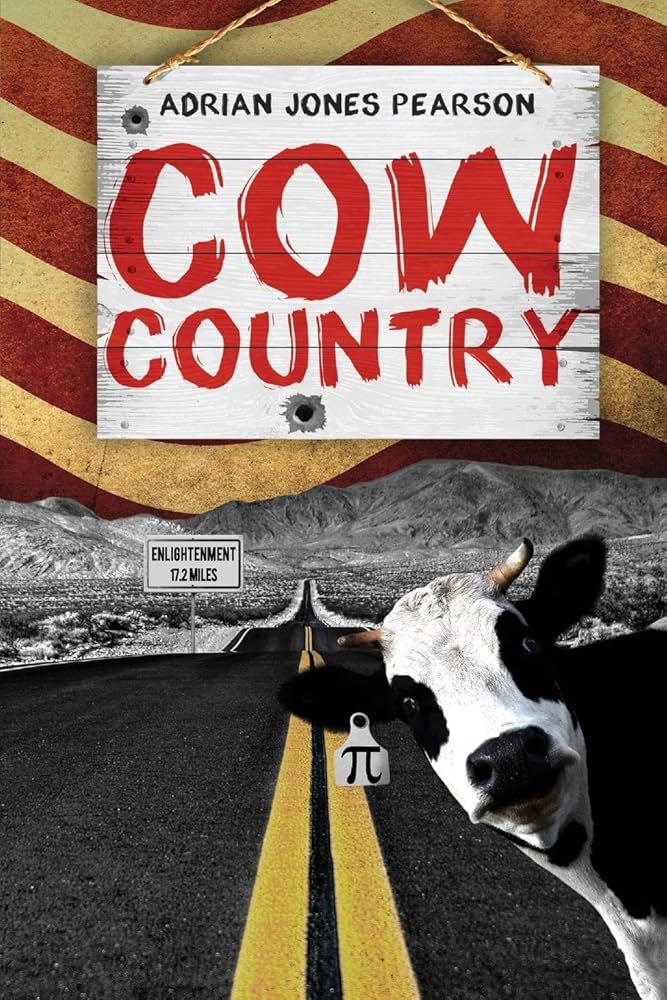
- Cow Country by Adrian Jones Pearson
- Changing Places by David Lodge
- Stoner by John Williams
- Small World by David Lodge
- Pnin by Vladimir Nabokov
- On Beauty by Zadie Smith
- The Rebel Angels by Robertson Davies
- The Human Stain by Philip Roth
- Disgrace by J M Coetzee
- Straight man by Richard Russo
- Vladimir by Julia May Jonas
- The Marriage Plot by Jeffrey Eugenides
- Thinks… by David Lodge
- Starter for 10 by David Nicholls
- Gaudy Night by Dorothy L Sayers
- All Souls by Javier Marias
- Porterhouse Blue by Tom Sharpe
- The History Man by Malcolm Bradbury
- Coming from Behind by Howard Jacobson
Some of those near the end of the list really are rather dated and it is harder now to find humour in some of the events described. Still, they just sneak into the top 20 as they do have some merit I think.
Those bubbling under or dropping like stones include:
- To The Dogs by Louise Welsh
- The Groves of Academe by Mary McCarthy
- Lucky Jim by Kingsley Amis
- The Distant Echo by Val McDermid
- A Degree of Uncertainty by Nicola Smith
- I Am Charlotte Simmons by Tom Wolfe
- Indignation by Philip Roth
- Normal People by Sally Rooney
- The Art of Fielding by Chad Harbach
- How I Won a Nobel Prize by Julius Taranto (which I’ve only just read but does look like a future top 20 possibility)
- The Secret History by Donna Tartt (but definitely on its way down, despite representations from Maureen McLaughlin)
Several I would really struggle to award a weak Third to:
- The Professor of Desire by Philip Roth
- The Idiot by Elif Batuman
- Dear Committee Members by Julie Schumacher
- Pictures from an Institution by Randall Jarrell (despite David Lodge’s positive assessment)
I read these a long time ago but did not look at them as campus novels so will have to return to:
- White Noise by Don De Lillo
- Rules of Attraction by Bret Easton Ellis
- Invisible by Paul Auster
Others on the reading list which I have, unaccountably, yet to to get to:
- Anglo-Saxon Attitudes by Angus Wilson
- Very Peculiar Practice by Andrew Davies
- The War Between the Tates by Alison Lurie
- Wonder Boys by Michael Chabon
As noted before a number of these on all of the lists above are now perhaps slightly past their best before date. Whilst it is not a problem in many cases – the strength of the characters, the plotting or the humour carries them through – in others it can really be almost a fatal problem. Campus life, despite its frequent appearance as a cloistered, timeless existence, has lots of contemporary relevance and where this is overdone is more likely to date. Similarly, attempts at writing about outrageous behaviour in a university or challenging social conventions involving students and/or staff, can fall flat after the passage of time. Humour does not often travel well in time. Too often the attempts at incisive wit in relation to academia or university management just sound cynical and coarse.
And given where we are now it seems difficult to imagine that works of great humour and merit are going to emerge from the highly challenged higher education sector in the UK or elsewhere. But for as long as I can remember I’ve heard people say they have been working on the next great campus novel so maybe one will appear someday soon. And let’s not forget that the number 1 on the list above, Nice Work, was published in 1988, only a few years after the most dramatic disruptions in higher education for generations. There are yet grounds for optimism.
Are there other novels you think stake a claim to be in that top 20?


 The Wonderful (& Frightening) World of HE
Leave a reply to Paul Cancel reply