
Can You Dig it?
A few years ago we presented the first ever league table of university tunnels over on Wonkhe. Whilst there hasn’t been a huge amount of movement since then, there is always new information coming to light about universities’ operations below ground level. Moreover, in the fine tradition of rankers everywhere, there is always a need to fluff the criteria a bit, just to shake things up.
There are many universities which have made claims for inclusion in this ranking, and some of the advocates have made some pretty bold claims about tunnels under campuses which might have existed many years ago. But it’s all about the evidence here I’m afraid.
Naturally, the criteria are somewhat obscure and opaque but we have ranked each tunnel based on scale, coolness, utility (beyond utilities) and associated myths and legends. As is customary with this kind of league table most of the top placings are taken by North American universities who are naturally bigger and better at this kind thing but also have greater needs motivated by severe winter weather. Artwork features in quite a few tunnels but you often have the impression that university managers didn’t know where it should go and didn’t like the idea of some of the more edgy stuff messing up their nice clean walls above ground.
Note that wind tunnels continue to be excluded from consideration as, let’s be honest, they are a bit dull for those not involved in aerodynamic research and no-one is excited about going for a walk through one.
So there are many university tunnels to choose from for this league table and a few new entries this time around as well as a couple of relegations from the top 10. Building on the success of the last one then it is time for the all new 2025 ranking of university tunnels. Where will your favourite be?
The all new Tunnels Top 10 for 2025
10. Harvard University
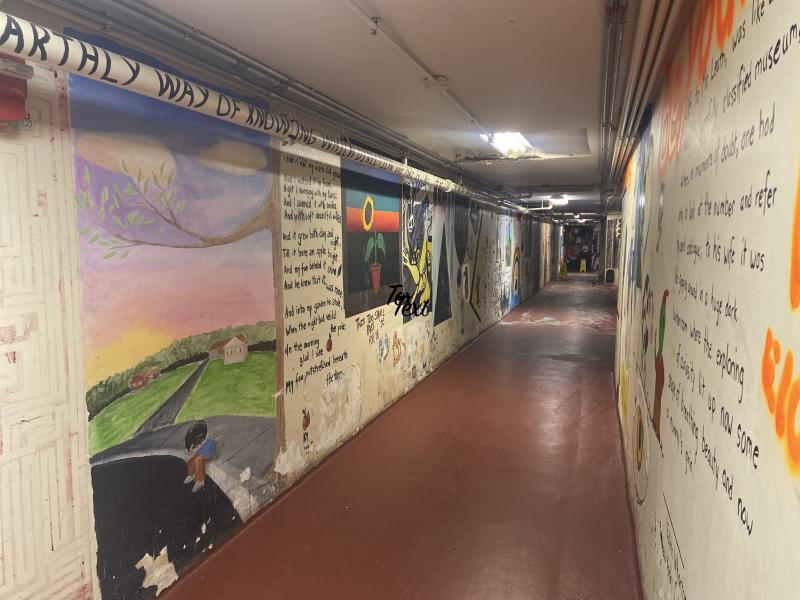
Harvard has a number of separate tunnel systems, including under student residences. This one in Eliot House for example features lots of unfinished artwork which by tradition is provided for future generations of undergraduates to complete before leaving their own outlines:
In addition to being spaces for traditions, the tunnels serve as home to communal spaces. A rowing room, gym, movie theater, and dance studio are all located within Eliot’s tunnel system. Eliot’s laundry room can also be easily accessed via the tunnels.
But the tunnel system extends beyond the Houses, in fact, it extends throughout Harvard. The main tunnel system stretches from the Business School to the Law School, and the majority of the system cannot be accessed by students.
9. University of Sydney
Dropping down the table this year we find one of few tunnellers from down under, the University of Sydney, which has a Graffiti Tunnel:

The Graffiti Tunnel is a legal graffiti wall running between the Holme Building and Manning House. It is the only site in the University where paint may be used. The university and campus security guards only request that the artwork is “clean” and that the door handles are left alone!
It’s quite small but perfectly formed.
8. Duke University

Duke University’s tunnel is nearly a century old and, opening in 1927, the tunnel has served as a main artery providing heat, water and electricity to campus buildings:
Amy McDonald, assistant university archivist at Duke University Archives, said the tunnel system illustrates the scale of construction on East Campus during the 20s.
“It was a complete re-imagining of the campus, down to below the ground,” she said. “The tunnel is a reminder of the unseen labor that was and continues to be carried out on campus today.”
There are occasional visits for students though.
7. University of Minnesota

Climbing a couple of places this year we have the University of Minnesota which would have placed even higher if it didn’t keep going on about gophers:
The first tunnels at UM, which are sometimes called the “Gopher Way,” date back to the 20’s. The university has 6 miles of tunnels and skyways, UM told HuffPost. A couple of students even created an online game based on the map of the system.
“The Gopher Way is certainly used more often during bad weather as a way for students to move across campus without being exposed to rain, snow or below-zero temperatures,” said Tim Busse, commucations director of university services at the University of Minnesota. “At the same time, on a cold winter day you’ll notice many students staying above ground taking on the weather and elements, which goes to show how tough Midwesterners are.”
6. Rochester University
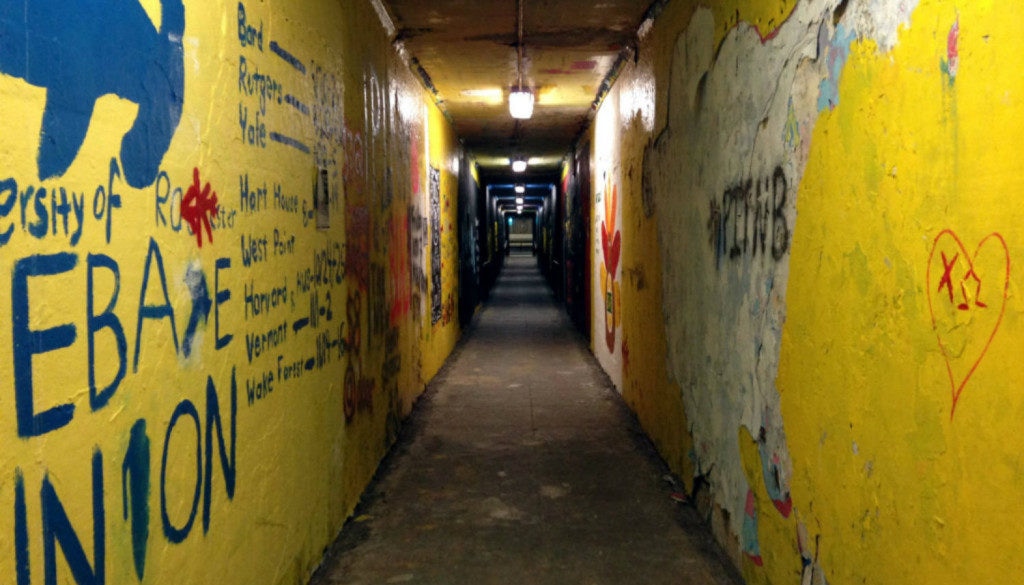
The tunnels at Rochester, which climbs to sixth place in this year’s table, have a very practical value and allow students to move around the campus while being protected from bad weather. One of the tunnels is also home to a revolving public art space apparently.
5. Concordia University
Concordia University is holding its own over in Wisconsin and students there can enjoy warm walks through nearly four miles of connecting tunnels when it is just too wintry outside. This news reporter was shown round by some university staff:
Those underground passages connect everything: residence halls, classroom buildings, sports facilities, the chapel, the administration offices. You can literally go almost everywhere on campus without going outside.
Of course, there’s signage everywhere.
“We certainly have a lot of that to help people along,” says Buss. “You can see how it’s pretty easy to get lost or disoriented down here.”
We walk through the tunnels and we see a bit of all of these different kinds of spaces. Some of the most interesting are the ones that were part of the convent campus.

The university has strongly religious origins and this campus included a convent – there are plenty of stories of nuns skateboarding and roller-skating through the tunnels back in the day apparently.
4. Carleton University
Carleton University has a very extensive tunnel system with many students finding them a warm place to work.
While some students have expressed safety concerns about the tunnels following reports of someone driving through them on a motorbike which limited CCTV was unable to prevent, they all seem to appreciate the shelter they provide against the winter weather:
Jean Yen, a post-graduate student who admitted to being less comfortable in the tunnels when they weren’t busy, said she appreciated the tunnels when there’s a lot of snow outside. “When you want to stay inside and stay dry, the tunnels are really good.”
Wise words Jean.
3. Columbia University
Most of Columbia University’s tunnels are for heating and other services

But they do have an interesting history:
During the ’68 student strike, student staff at WKCR, Columbia’s radio station, used the tunnels to tap the university’s telephone system. Students also made use of the tunnels to travel between buildings occupied by strikers.
The names of students and alumni who have visited the tunnels appear scrawled throughout the tunnels. Ken Hechtman is one of the most infamous former Columbia tunnelers. In 86, he led an underground group of tunneling students called AD HOC (Allied Destructive Hackers of Columbia). Hechtman was expelled during his first year at Columbia for stealing Uranium-238 from Pupin Hall, along with many dangerous chemicals from Havemeyer Hall.
As is often the case it’s all happening at Columbia.
2. Northeastern University
Northeastern University’s tunnels are pretty popular, especially in the colder months. Students really do like them and one of them, who appears to share his name with the much-missed former lead singer in the Clash, is particularly upbeat:
A 25-year-old graduate student from Estero, Florida, Joe Strummer isn’t used to the cold. After all, it’s in the mid-70s back home on the shores of the Gulf of Mexico. So the mechanical engineering major does what many students here do—he goes underground.
Northeastern‘s tunnel system—a 16,705-foot network that connects 11 buildings—is a hidden gem, but not to Strummer. He uses it all the time.
“I definitely think the tunnels are helpful for people who want to use them,” he says. “A lot of people don’t like the cold. And if there’s a lot of snow or ice on the ground, it can become cumbersome to walk.”
You can find more details in this handy guide to the university’s underground network which also notes:
Northeastern‘s underground tunnel system is a hidden gem, one that is particularly useful when you‘re looking to escape the cold and avoid the snow and rain while making your way across campus.
Here, we provide a digital tour of the tunnel system and highlight how to easily navigate between various buildings to find food, labs, and a variety of university resources
Freezing on the way to class? Northeastern has underground tunnels.
1. Wright State University
And top of the charts for a second time is Wright State University which by all accounts still appears to have the biggest and best tunnel system of them all and where tunnels are a fundamental part of campus life:
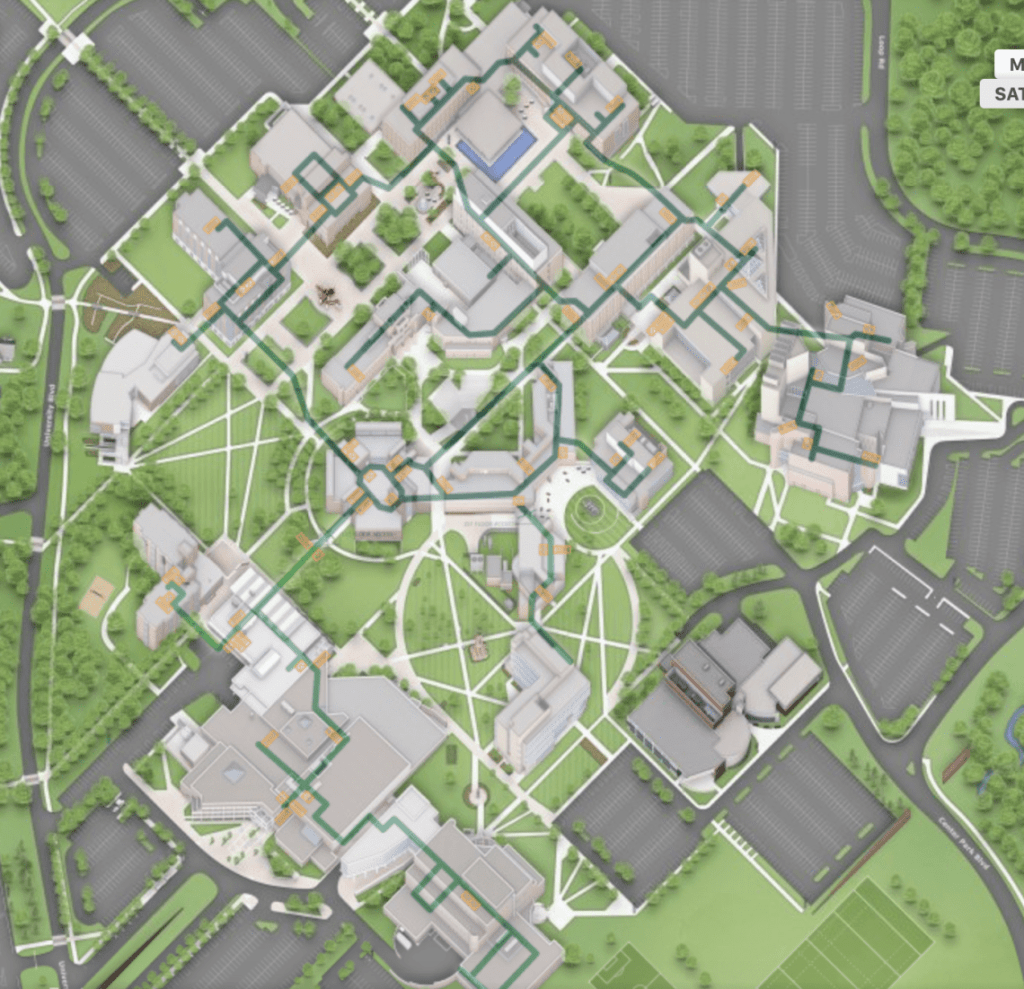
An underground system of tunnels connects virtually all buildings on the Wright State campus. Designed to make the campus more accessible to persons with disabilities, the tunnel system provides a convenience to all in bad weather. The tunnel system may be entered in any building by way of the stairwells or elevators. Finding one’s way in the tunnels is facilitated by overhead signs at all tunnel intersections and tunnel maps. Also located in various places in the tunnel system are vending machines. Jogging, biking, skateboarding, and rollerblading are forbidden in the tunnels
Well done to the far-sighted designers of the Wright State campus.
Bubbling under
And beyond these you might want to check out Montana University’s tunnels (which are mainly to do with heating it seems). The University of Texas at Austin also has an elaborate tunnel network designed to enhance the sustainable use of energy on campus.
Brown University, which has dropped out of the top 10 this year , has tunnels with real history behind them – they were built in the 19th Century to transport goods and supplies around the campus. The network apparently ‘prevented distractions’ and allowed the carts to move freely in the winter. One of the tunnel entrances was said to be the inspiration for the Bat Cave in the original 1960’s Batman television series.
There are some real myths and legends about the tunnels at Yale, which also slipped out of the top 10 this year:
During the Cold War era, the tunnels and other Yale underground spaces, such as residential college basements, were designated as “fallout shelters.” Believed capable of withstanding the high-level radiation of a nuclear attack, the tunnels were stocked with supplies and incorporated into the University’s emergency pla
In addition, the University of Oregon has 4 miles of tunnels just for utilities and the University of Waterloo has some off limits tunnels too. Oakland University has some tunnels apparently but they also did an April Fool campaign a few years back suggesting they were going to do a major refurbishment – not amusing at all.
Penn State University’s tunnel system seems largely to be based on legend and optimism from the student community.
Calvin University also has a tunnel offer as does Albany and there are also some to explore at Mount Royal University.
MIT is not the kind of place to miss out on the fun but the tunnels at the University of California at Irvine really do not welcome the casual visitor.
And there appear to be some major problems at Memorial University in Newfoundland where its “MUNnels” have some significant maintenance issues which are preventing their use.
La Trobe University has a handy tunnel which at one point enabled a Vice-Chancllor to escape from some protesting students. Ideal if you have the key.
Closer to home, UCL has some tunnels it seems but you will be lucky to find them.
Imperial College has plenty of service tunnels under the streets of Kensington.
The University of Birmingham has about a mile of artificial mineshaft tunnel which twists around in the earth beneath the University’s Edgbaston campus. Apparently it was built in 1905 to give mining students a taste of a working life underground. The ‘mine’ closed in the 1960s, when the teaching of mining at Birmingham ended, but the tunnel remains.
And of course the University of Nottingham has a tunnel. It’s not a very long one and links the East end of the Trent Building to the West end of the Portland Building.
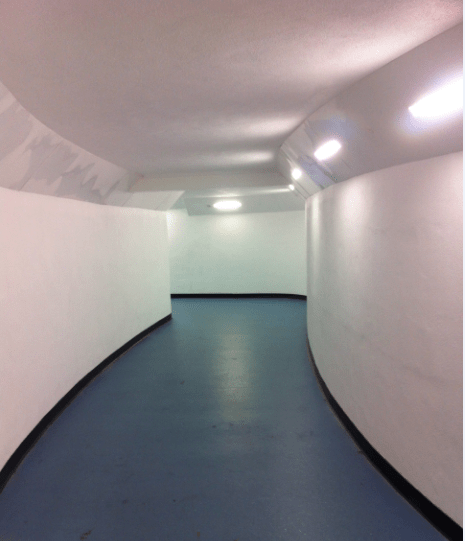
It was created, so legend has it, to enable a former Vice-Chancellor to travel between the buildings (presumably for lunch) without getting wet. Still, it is pretty exciting and there are many students (and staff) who still do not believe it exists and therefore fail to take advantage of it.
Just for the record, here is that Top 10 in full:
- Wright State University (1 last year)
- Northeastern University (-)
- Columbia University (6)
- Carleton University (4)
- Concordia University (5)
- Rochester University (8)
- University of Minnesota (10)
- Duke University (9)
- University of Sydney (2)
- Harvard University (-)
There you have it then. Until the next top ranking university ranking of top tunnels emerges.


 The Wonderful (& Frightening) World of HE
Leave a reply to dennisfarringtonc28aa93dcd Cancel reply