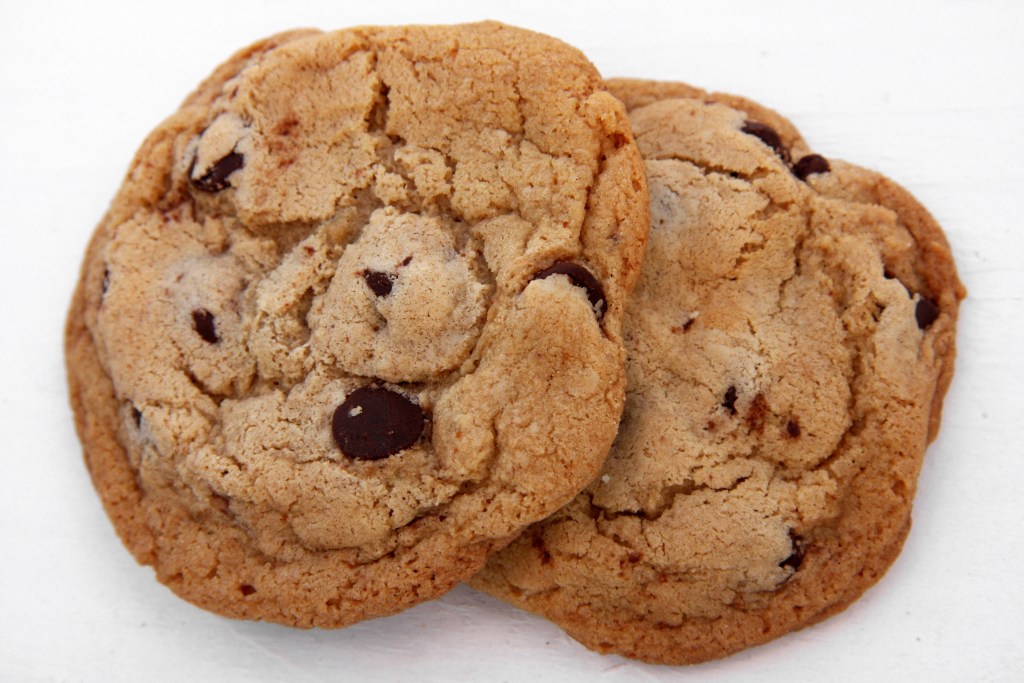
Cookies, cookies, cookies
No, not the online kind you reject (or reluctantly accept on account of them apparently being essential). This is about what we in the UK would call biscuits. In this case, nomenclature is not that important as what is being described is incentivisation with treats. Chocolate in particular.
It has long been an article of faith in universities that if you want to get students to come to a meeting or focus group or to meet external reviewers the best way to do it is to offer food (with staff, you tend to need both food and drink to really get the party swinging). It might be speculated origins of this approach can still be seen in the practice in restaurants which offer a small chocolate or mint sweet with the bill and a feedback form. “Review us on TripAdvisor!!!” But maybe not.

Anyway, this essential article from a few years ago explored the critical linkage between food and student views in a somewhat rigorous way and found that providing cookies to students during end-of-course evaluations had a significant effect on the results.
The starting point was a concern about whether student evaluations, which can have a real impact on academic staff promotion and progression etc, are as robust as they are often claimed to be.
Questionnaires and cookies
The approach taken in the study was as follows:
We performed a randomised controlled trial in the setting of a curricular emergency medicine course. Participants were 118 third-year medical students. Participants were randomly allocated into 20 groups, 10 of which had free access to 500 g of chocolate cookies during an emergency medicine course session (cookie group) and 10 of which did not (control group). All groups were taught by the same teachers. Educational content and course material were the same for both groups. After the course, all students were asked to complete a 38-question evaluation form.
The results were very interesting indeed and it turned out that the cookie group evaluated teachers significantly better than the control group leading to the following definitive conclusion:
The provision of chocolate cookies had a significant effect on course evaluation. These findings question the validity of SETs and their use in making widespread decisions within a faculty.
A few further observations:
- The researchers chose what the describe as a traditional ‘drop cookie’ as the chocolate delivery mechanism. The chocolate element was regarded as important.
- Each cookie group had 500g of cookies meaning there were plenty to go round. Teachers were allowed to eat one themselves just to get the ball rolling, cookie-wise.
- The researchers offer the explanation of the chocolate content of the cookie as the most important influencer on student mood leading to a more positive evaluation.
- There are limitations to the study which are acknowledged. These include the possibility of teachers adapting their teaching styles based on insider cookie knowledge and the potential for the impact of cookies to be affected by proximity or otherwise to meal times.

Wider benefits and impact
According to the findings each student ate 68g +/- 26g of cookies. If we stick with 68g as the mean and work on a final year undergraduate student population in a reasonably sized university of say 5,000 students that’s 340 kg of cookies. If we went with a straightforward purchase of packs of Maryland cookies at Sainsbury’s, vending at 85p per 100g, that’s under £3k to provide s reasonable number of chocolate chip cookies to all finalists. Just imagine what a positive impact that might have on NSS scores!
The good news is that this approach does not fall foul of the rules about influencing the NSS as far as I can tell. Admittedly, cookie distribution during the several weeks that the NSS is live might be challenging and it may be tricky to ensure that cookies are not pinched by other students and staff but these are details which can be ironed out I am sure. And it is important to note that any improvement in NSS results which is down to the impact of chocolate rather than actual improvements in things which make students more satisfied might not be sustainable.
For some reason this article has not had the impact it deserves given the profound nature of the findings and the possible benefits for institutional NSS scores. I’m sure further research in this vital area is already planned or under consideration. If anyone is working on this, I would also be especially interested in the impact of pizza on student society memberships.
Endnote
Note that anyone seeking to implement this idea is strongly advised to consult relevant colleagues before ordering that lorryload of cookies. Also note that no liability can be accepted by the author in relation to anyone daft enough to do this.
The article referred to here is: Hessler, M., Pöpping, D.M., Hollstein, H., Ohlenburg, H., Arnemann, P.H., Massoth, C., Seidel, L.M., Zarbock, A. and Wenk, M. (2018), Availability of cookies during an academic course session affects evaluation of teaching. Med Educ, 52: 1064-1072. https://doi.org/10.1111/medu.13627

 The Wonderful (& Frightening) World of HE
Leave a reply to dennisfarringtonc28aa93dcd Cancel reply