I recently provided this handy league table of the best campus novels out there. It naturally caused some dispute which ultimately means that there are even more campus novels that I now have to read.
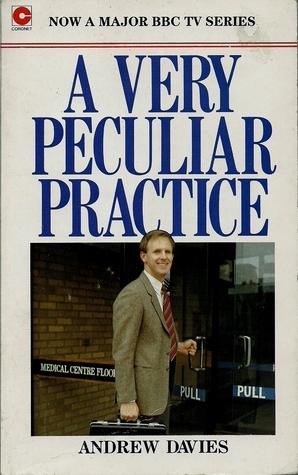
One book that was already on that list and which I was delighted to read recently is A Very Peculiar Practice by Andrew Davies. It’s a long time since I’ve seen the TV series and I had been meaning to read the book for ages. I was a bit worried it would disappoint but it really does not. It’s a quite dark and occasionally surreal comic novel which is set in a mid-80s middling university, Lowlands, and follows the trials and tribulations of members of the University Medical Practice. The book follows the first series of the TV programme very closely from my recollection and Davies I assume used his scripts as the basis of the text.
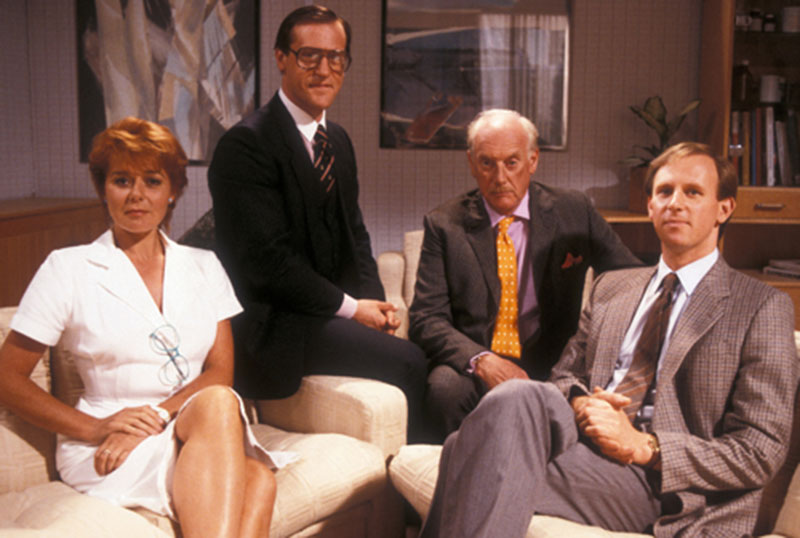
The main characters are the medical staff, principally the new doctor, Stephen Daker, who is desperately trying to make sense of what is going on in the institution. This commentary on the series by Neil Martin1, published in the very serious journal Comedy Studies (who knew?) provides a handy summary of the principal characters in the Medical Practice and the actors who played them in the TV series:
Its Head is a lugubrious, exopthalmic, eccentric drunk and author of ‘Sexual Anxiety and the Common Cold’, Dr Jock McCannon (played Graham Crowden), and the staff include a sociopathic, white-collared, stereotypical 80s yuppie, Dr Bob Buzzard (a brilliant, scene-stealing David Troughton); languorous cod-feminist Dr Rose Marie who insisted that illness was something men did to women (Barbara Flynn); and our Ulysses, our everyman, our Pennyfeather, Dr Stephen Daker (Peter Davison), a GP from Walsall who beat Marie and Buzzard for the post he now occupies.
The book was written and set in the mid-80s, just a few years after the dramatic higher education cuts imposed by the Thatcher government and a couple of years prior to the publication of the fantastic Nice Work by David Lodge. This environment and the impact of the cuts of the time runs throughout the text with various different approaches impacting on the institution including the efforts by the Vice-Chancellor (Ernest Hemmingway) to empty a hall of residence in a bid to attract support from Japanese investors.
Davies was an academic at the University of Warwick at the time of writing the TV script and novel and a version of the author appears in the book itself as the creative writing fellow Ron Rust, pitching his material to the BBC (as Davies himself was doing). I didn’t work at Warwick until quite a few years later but some of those longer serving staff I asked about this certainly recalled some real characters and interesting goings on in the University’s medical centre back in the day. No doubt this provided some helpful inspiration for Davies.
Lowlands University was it seems very much based on UEA but apparently the university did not want to offer itself up as the setting for the TV programme, having been burned by its association with Bradbury’s The History Man so it ended up being filmed at Birmingham and Keele.
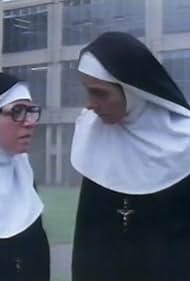
I do remember that in the TV series there is the repeated appearance of a pair of nuns on campus, always doing something rather strange. No explanation was ever provided for this and the novel offers no more help in this respect. But they are very much present throughout which is a delight.
Martin, in his article on the series mentioned above, also observes that
A Very Peculiar Practice, more by dint of its setting rather than its purpose, is also a comedy that follows in the tradition of several British comedies that are set in, or emerge from, medical environments.
And highlights from there the connection to a very particular British film genre, the Carry On series:
All of the Carry Ons, were ‘bright Rabelaisian spaces of innuendo, double entendre farce, carnival disruption and outrageous libido’ (Melia 2020), some of which is also seen, in more subdued form, in AVPP, especially in the demeanour, words and actions of Rose Marie.
Some of the best bits
Some of my favourite quotes from the book, which feel quite on point today, include the following.
Jock, the head of the practice is railing against the “cynical exploitation” of international students:
“We take these young people form all over the world , half of them don’t even speak English but we don’t care, do we? We want their money, shove them onto courses they can’t follow, let them sink or swim, let them suffer…we’ve got their Deutschmarks, we’ve got their Hong Kong dollars!”
And this catering observation hits home:
The University Grill room was a place where academics could gobble down steaks, escalopes, avocadoes and prawns, and guzzle bottles of indifferent wine at heavily-subsidised prices. The subsidised prices were made possible by the large profits made by the University caterers on the dogshit they served to students in Refectory.
Stephen and Lyn, his girlfriend, are discussing the VC’s sanity:
“You really think he is crazy?”
“Yup.”
“Well…don’t you think someone ought to do something bout it?”
“No point.” she said. “He functions perfectly in his context. I mean, madness is a social construct, like ideas of who’s pretty and who’s a criminal. This University’s a crazy place. That means when you’re in it, crazy’s the norm. People like you and me and Lilian, we’re the misfits.”
And, right at the end of the book, as Rust is dreaming up the most outlandish conclusion he can imagine, a merger with a police training college, this is exactly what appears to happen. And then his foot is run over (again) by the errant mini-driving nuns. It is a terrific and very amusing finale.
We Love You
Martin offers a couple of final points about whether things in HE are already too surreal for comedy:
It may be, as Ron Rust and Davies acknowledged many years ago, that the world of higher education is already so extraordinarily surreal that comedy may now be redundant. This may explain why, although AVPP included its fair share of the surreal, it was grounded in the relationships of its characters and the drama flowed from their interchange. The series opened with that song of [Elkie] Brooks with its refrain ‘We love you, we need you’. It probably referred to the students or the medical practice but, perhaps, it may just have been referring to Universities themselves.
Anyway, whatever its place in the TV pantheon and whether we will get any more decent comedy material from university life it is very much heading to the upper end of my list of favourite campus novels. I’d definitely recommend it as a good read in the current context.
- G. Neil Martin (2023) A Very Peculiar Practice: a very modern campus comedy, 35 years on, Comedy Studies, 14:1, 2-19,


Leave a Reply